
Space shrinks daily. Labor costs rise monthly. Choosing wrong balers crushes recycling profits. I've watched businesses bleed money by mismatching equipment.
Horizontal balers handle continuous high-volume recycling automatically while vertical models suit low-volume confined spaces. Your choice depends strictly on daily material quantity, space limits, and cost considerations.
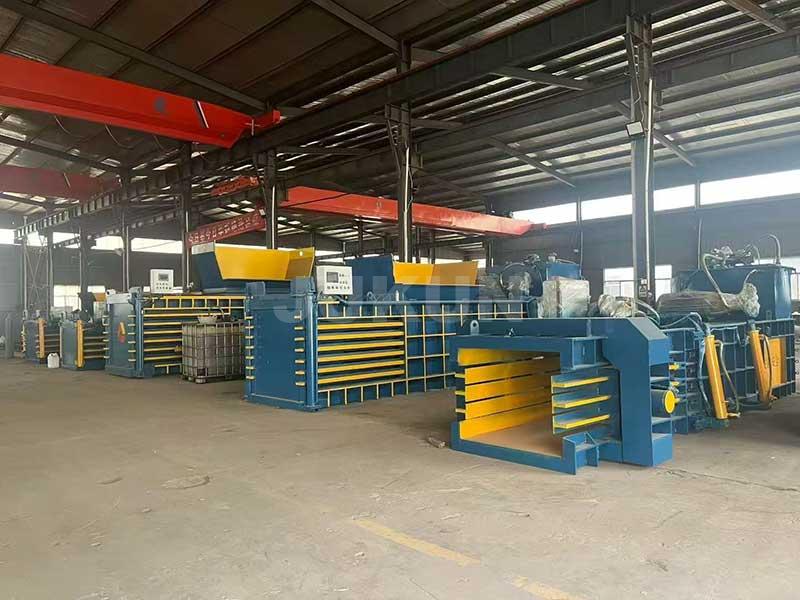
One warehouse saved $3,200 monthly after proper sizing. Another wasted $27,000 on unused automation. Let me guide your decision.
What Are the Key Differences Between Automatic Horizontal and Vertical Balers?
Workers often confuse these machines. Wrong picks cause dangerous bottlenecks. Understanding core differences matters fundamentally.
Horizontal balers feed materials continuously with conveyors while vertical versions require manual loading. Automation makes horizontal models far faster for busy recycling centers.
The Fundamental Production Gap
Four critical distinctions stand out:
| Feature | Horizontal Baler | Vertical Baler |
|---|---|---|
| Operation Cycle | Continuous processing | Batch-by-batch work |
| Labor Requirement | 1 worker manages multiple machines | Constant manual bale removal |
| Daily Capacity | Processes 15+ tons effortlessly | Struggles beyond 3 tons |
| Footprint Efficiency | Longer profile (10-18 meter length) | Tall design (3-4.5 meter height) |
| Power Consumption | Higher energy use (25-50kW systems) | Basic needs (7.5-15kW) |
At our facility, one automatic horizontal baler handles what three vertical units could achieve. Speed matters when trucks wait for shipments.
Material thickness changes everything. Horizontal balers compress cardboard consistently at 450 tons pressure while vertical models average 40 tons capacity only.
Which Industries Benefit Most from Horizontal and Vertical Balers?
Recycling demands vary wildly. Hospitals don't bale like factories. Industry understanding prevents costly errors.
High-volume industries like paper mills thrive with horizontal automation. Small businesses like restaurants excel with vertical machines where space is expensive.

Perfect Fit Scenarios
Match machinery to your environment:
-
Horizontal baler champions
Recycling centersprocess cardboard streams nonstop
Distribution warehousesmanage continuous packaging waste
Manufacturing facilitiesrequire minimal labor intervention
Paper millsdemand bulk throughput daily -
Vertical baler specialists
Supermarket chainsneed compact units per location
Restaurant groupsbenefit from affordable solutions
Shopping mallsprioritize space saving
Office buildingsmanage predictable volumes
One hotel chain installed vertical balers wrongly. Their 200 rooms generated excess cardboard daily. Switching to horizontal units slashed waste costs 65% within 8 weeks.
Which Baler Offers Better Productivity, Lower Labor Costs, and Higher ROI?
Money disappears with inefficient processes. Labor absorbs profits. Automation pays back faster than most expect.
Automatic horizontal balers deliver superior long-term returns while vertical balers shine when budgets limit purchase options initially.
Crunching the Profit Numbers
Consider these calculations:
-
Labor savings
Horizontal balers cut staffing needs 4:1. One Belgian facility reduced workers from eight to two while tripling output. -
Downtime costs
Vertical models require constant bale removal blocking production. Horizontal automation ensures nonstop flow saving 45 minutes hourly. -
Revenue growth capacity
Horizontal systems grow alongside your business while vertical units max out quickly forcing reinvestment. -
Total five-year ownership
Calculate:
Horizontal example- Initial: $150,000
- Labor savings: $312,000
- Maintenance: $11,000
Vertical equivalent - Initial: $60,000
- Labor burden: $415,000
- Maintenance: $29,000
A Canadian recycler shared his math: Horizontal ROI beat vertical investment by 200% after 16 months despite double the upfront cost.
How to Choose the Best Horizontal or Vertical Baler for Your Business?
Impulse purchases cause regret. Space misjudgments waste thousands. Smart selection protects profits.
High volume demands horizontal automation while space constraints favor vertical balers. Analyze daily material weight first then evaluate footprint availability logically.
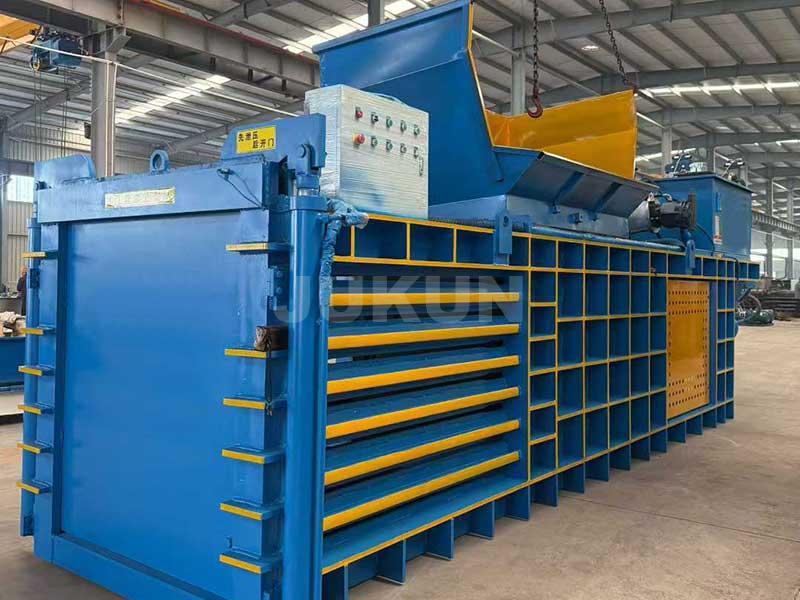
The Five-Step Selection System
Apply this process strictly:
-
Volume measurement
Weigh today’s waste accurately. Forecast tomorrow’s growth too. -
Space audit
Map available floorspace. Include:- Operation clearance
- Conveyor paths
- Bale storage zones
-
Material analysis
Document:- Cardboard vs. plastic percentages
- Contamination levels
- Peak generation hours
-
Labor reality check
Quantify available staffing versus baling time required. -
Future-proof verification
Ensure chosen machine handles:- Planned facility expansion
- New material streams
- Technology integrations
Avoid sales pitches until you complete these steps. A Michigan company avoided overbuying after accurate measurement revealed underutilized vertical balers already sufficed.
Conclusion
Match baler type to volume and space. Horizontal suits bulk processing while vertical excels in compression spaces.