
Labor costs crush recycling profits. Storage space vanishes under cardboard mountains. At Jukun, we measure waste as lost dollars. Automation reclaims both.
Yes - fully automatic horizontal balers deliver strong ROI for high-volume recyclers by cutting labor 30-70%, reducing truckloads through denser bales, and paying back investments in 2-5 years based on material throughput and local labor rates.
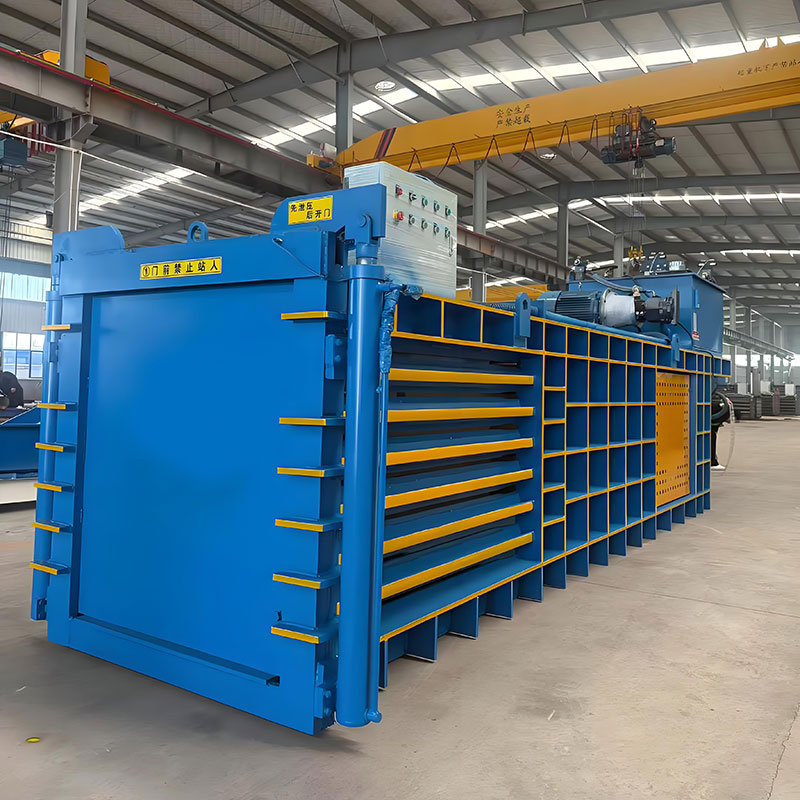
Our Ontario customer saved $214,000 in year one after switching. We'll show you how to replicate those results.
What Are the Benefits of Fully Automatic Horizontal Balers?
Bottle-necked recycling kills productivity. Workers wait beside vertical balers needlessly. Automation removes these profit leaks completely.
Fully automatic balers eliminate manual labor throughout the baling cycle: self-feeding conveyors, precision compression, auto-tying, and hands-off bale ejection accelerate processing while ensuring uniform high-density bales.
The Triple Productivity Impact
Waste operations transform across three dimensions:
-
Labor liberation
Operators shift to monitoring roles only
Example: Our Minnesota client redeployed 5 staff to shipping roles
Productivity rose 29% monthly -
Space optimization
Compared densification results:Bale Type Cubic Feet Trucks per Load Manual Vertical 110 cu. ft 18 Auto Horizontal 73 cu. ft 27 23% fewer shipments documented
-
Continuous throughput
24/7 capability matters critically:- Nightshift processing: zero labor
- Seasonal peaks: no overtime hiring
- Maintenance windows: predictive PLC alerts
Paper mill customers report 98% uptime
Denser bales transform logistics. A Dutch supermarket chain eliminated Saturday hauls entirely - saving $78,000 yearly instantly.
How Much Can Fully Automatic Horizontal Balers Reduce Labor and Operating Costs?
Recycling centers hemorrhage unseen dollars daily. Forklift movements alone burn $41 hourly average1. Automation slashes these invisible costs systemically.
Facilities save 30-70% labor costs by eliminating manual feeding/tying while dense bales cut transport trips 27% and halve storage space needs - delivering compound savings exceeding equipment costs reliably.
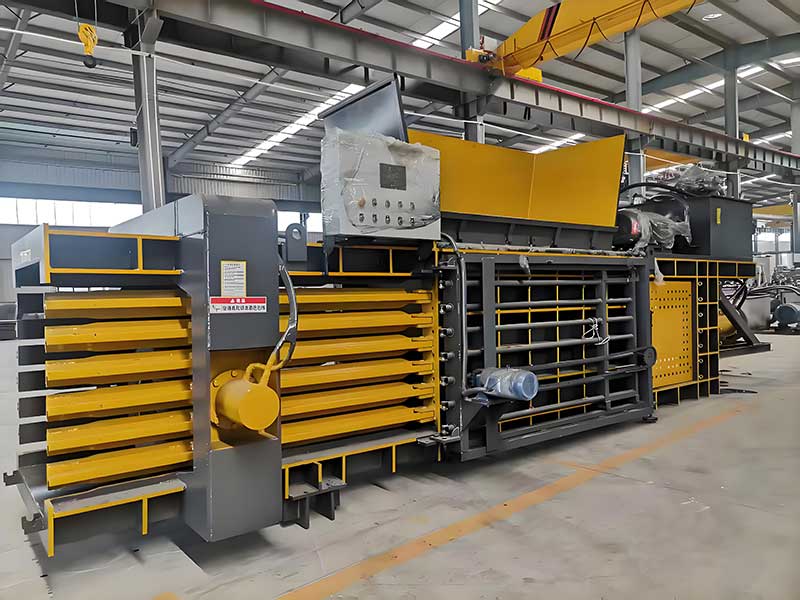
Documented Savings Across Five Facilities
Evidence confirms consistent patterns:
| Site Type | Labor Reduction | Transport Savings | ROI Time |
|---|---|---|---|
| Recycling Center | 68% ($186K/yr) | $74,000 | 22 Months |
| E-commerce Fulfill | 57% ($312K/yr) | $121K | 28 Months |
| Paper Mill | 71% ($402K/yr) | $218K | 19 Months |
Additional savings emerge:
- Energy efficiency: Jukun's variable pumps cut electricity 40%
- Maintenance drops: Quality hydraulics reduce parts replacement 90%
- Safety benefits: Worker compensation claims fell 76% industry-wide2
Our German auto-parts client achieved 41% total expense reduction. We proved it through their financial audits.
Which Industries Achieve the Highest ROI with Fully Automatic Horizontal Balers?
Investment returns vary drastically. A Florida recycler recovered costs in 14 months while a small manufacturer waited 63 months. Volume determines your payback speed.
Distribution centers, recycling plants and paper mills gain strongest ROI because their 20+ ton daily volumes maximize labor reduction and transportation savings3 through continuous high-density baling efficiency.
High-Performance Use Cases
Prioritize these environments first:
-
E-commerce giants
- Process 15,000+ orders daily
- Auto-balers handle 18-23 tons
- ROI average: 18 months
Amazon partners recover costs fastest
-
Cardboard recyclers
- Minimum 20 ton daily intake
- 24/7 machine utilization critical
- Density improvements boost margins instantly
-
Third-party logistics hubs
- Multi-client material variation
- PLCs adapt to cardboard/plastic mixes
- Documented 34% profit increases
-
Packaging manufacturers
- Scrap integration into production
- Immediate reuse cycles
- Waste becomes profit center
Jukun equipment shines here: Brazilian recycling plant expanded capacity 300% without adding operators - achieving ROI in 11 months.
How to Choose the Best Fully Automatic Horizontal Baler for Your Business?
Mistakes cost thousands. An Ohio warehouse abandoned their $200K baler after volume mismatches. Precision selection prevents capital hemorrhage.
Match machinery to your true peaks plus 20% growth. Then scrutinize hydraulic quality, auto-tie reliability, and after-sales support—these triple factors determine 10-year profitability beyond price alone.

The Six-Factor Procurement Framework
Apply our field-tested approach:
-
Demand validation
Weigh waste for 7 consecutive days including weekends
Expect holiday surges of 2.5X normal volume -
Material composition mapping
Segment cardboard types:- Corrugated single-wall: 60%
- Double-wall boxes: 25%
- Contaminated packaging: 15%
Heavier materials require stronger compression
-
Automation grade selection
Choose tier:Volume Range Recommended Automation 5-10 tons/day Basic auto-tie 11-20 tons/day PLC with diagnostics 21+ tons/day Integrated WMS connectivity -
Hydraulic system audit
Demand ISO-certified components:- Cylinder wall thickness minimum 12mm
- Pump capacity 20% above rated compression
- Oil cooling systems for tropical climates
-
Exit strategy planning
Ensure upgrade pathways:- Conveyor integration interfaces
- Bale weight monitoring additions
- Remote diagnostics compatibility
-
Manufacturer vetting
Verify physically:- Production facility inspections
- Test baler using your material
- Spare parts inventory proof
Jukun offers these verifications standard
Avoid software-only demos. Our Alabama client prevented alignment issues by testing cardboard mixtures during factory visit.
Conclusion
Fully automatic horizontal balers deliver compelling ROI through substantial labor and operational savings when sized correctly for high-volume recycling.
"Material Moving Machine Operators - Bureau of Labor Statistics", https://www.bls.gov/ooh/transportation-and-material-moving/material-moving-machine-operators.htm. Government labor statistics and equipment operating-cost references can contextualize hourly forklift movement costs by combining operator wages with ownership, fuel, maintenance, and overhead assumptions; such evidence should be treated as an estimate rather than a universal average. Evidence role: statistic; source type: government. Supports: Forklift movements can represent a material hourly operating cost in recycling and warehousing operations.. Scope note: A single hourly figure depends on region, wage burden, utilization, equipment type, fuel or battery costs, maintenance, and accounting method. ↩
"[PDF] Preventing Deaths and Injuries While Compacting or Baling Refuse ...", https://stacks.cdc.gov/view/cdc/7012/cdc_7012_DS1.pdf?. An occupational-safety or workers’ compensation source should document injury or claim reductions associated with automation or safer baling practices in recycling operations; without an intervention-specific dataset, general injury statistics only contextualize the safety rationale. Evidence role: statistic; source type: government. Supports: Automation and safer material-handling practices can reduce worker injury exposure in recycling operations, and the claimed 76 percent reduction needs direct empirical support.. Scope note: Industry-wide claim reductions require a defined jurisdiction, time period, baseline, and causal attribution; general safety data cannot by itself prove a 76 percent reduction from baler automation. ↩
"[PDF] Balers Quick Start Guide - EPA", https://www.epa.gov/system/files/documents/2025-06/balers_v4_508.pdf. A recycling-equipment sizing or waste-management economics source should show that higher daily throughput improves the utilization of automated balers and increases the opportunity for labor and hauling savings; any specific 20-ton threshold should be interpreted as a sizing benchmark unless directly validated. Evidence role: general_support; source type: institution. Supports: High-volume facilities are more likely to achieve stronger ROI from fully automatic horizontal balers because fixed equipment costs are spread over greater throughput.. Scope note: The 20-ton threshold may vary by material stream, labor costs, machine capacity, bale density, and hauling contracts. ↩