
Premature wear increases costs. Space limitations restrict operations. Labor inefficiencies drain profits. Choosing incorrectly wastes investments.
Horizontal balers handle 5-28 tons/day with 80% automation; vertical balers manage 0.5-3 tons manually - material volume, labor costs and facility space determine the ideal choice.
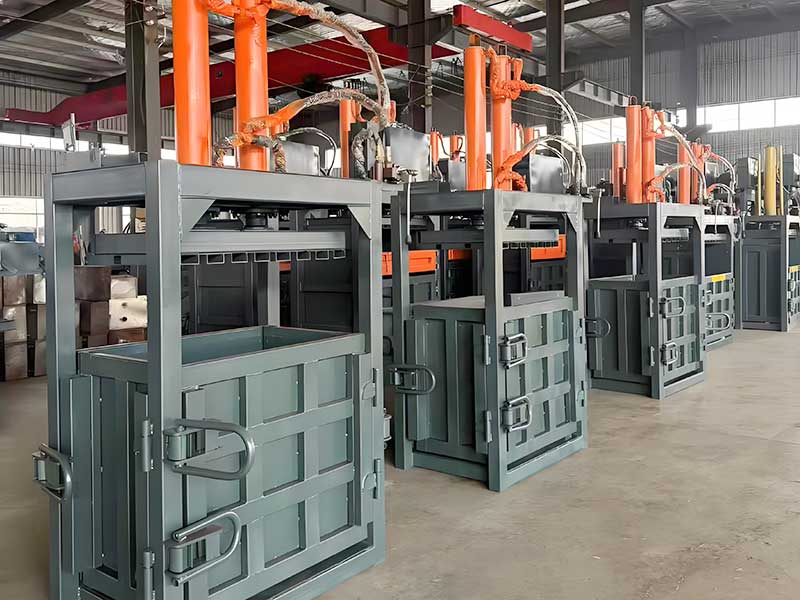
Precision selection guidance ahead.
What Are the Key Differences Between Horizontal and Vertical Balers?
Manual feeding increases injuries. Limited capacity causes bottlenecks. Automation options vary widely. Design distinctions define applications.
Horizontal balers compress materials sideways with automated feeding for continuous processing; vertical models compact downward through manual loading for batch operations, yielding smaller bales.
Technical differentiation explained.
-
Core Structural Comparison
Feature Horizontal Baler Vertical Baler Compression Axis Horizontal Vertical Loading Method Conveyor/auto-feed Manual Cycle Speed 60-100 cycles/hour 15-30 cycles/hour Bale Weight 500-1200 kg 100-300 kg Floor Space 20-60 m² 8-15 m² -
Typical Industry Applications
- Horizontal: Recycling plants (400+ kg/hr), distribution centers, manufacturing
- Vertical: Supermarkets (2-8 bales/day), small retail, offices, hotels
- Hybrid Options: Semi-automatic for mid-volume operations
-
Jukun Engineering Insights Our field data shows:
- Horizontal dominates >3 ton/day operations
- Vertical suits space-constrained facilities
- Custom transitions minimize operational gaps
- Application quiz tool
Which Baler Delivers Better Productivity and Bale Output?
Manual bale handling slows operations. Inconsistent density reduces recyclable value. Throughput limitations create delays. Automation determines output efficiency.
Horizontal balers produce 3-5X more bales/hour at 42% higher density than vertical models, with automated systems requiring 75% less operator intervention for equivalent volume.

Output performance analysis.
-
Productivity Benchmark Data
Metric Horizontal Vertical Advantage Throughput (tons/day) 5-28 0.5-3 +450% Labor Hours/ton 0.4 1.8 -78% Bale Density (kg/m³) 380-650 220-350 +42% Downtime Percentage 3.8% 11.2% -66% -
Quality Output Factors Bale consistency impacts:
- Transport efficiency
- Recycling revenue
- Storage optimization
- Buyer satisfaction
-
Jukur Productivity Testing Our validation methods:
- Material-specific density reports
- Throughput verification videos
- Loading pattern simulations
- Automated quality control sensors
How Do Horizontal and Vertical Balers Compare in Cost and Space Usage?
Upfront pricing causes over-saving. Hidden operating costs erode profits. Space misallocation reduces workflow. Total ownership costs define value.
Vertical balers cost $18K-$45K but need 3X more labor; horizontal models cost $48K-$220K yet deliver $76/ton savings - facility size determines the cost-efficient choice.
Financial and spatial mapping.
-
Total Cost Breakdown
Cost Factor Horizontal Baler Vertical Baler Purchase Price $48,000-$220,000 $18,000-$45,000 Installation $4,000-$22,000 $1,500-$6,000 Labor/ton $12-$28 $42-$86 Maintenance/Year $3,200-$8,800 $1,800-$4,200 Space Required 32-60 m² 8-22 m² -
Space Utilization Models
- Urban facilities: Vertical + vertical storage
- Industrial plants: Horizontal + conveyor routing
- Hybrid warehouses: Central horizontal with satellite verticals
-
Jukun Space-Cost Solutions Our tailored designs:
- Narrow-width horizontal models
- Multi-level conveyor interfaces
- Mobile vertical units
- Plant layout optimization
Which Baler Provides the Best Return on Investment?
Wrong capacity selection stalls growth. Labor inflation reduces gains. Future scalability limitations force replacements. Volume determines ROI optimization.
Vertical balers ROI: 12-18 months for <3 tons/day; Horizontal ROI: 8-14 months for 5+ tons/day - with automation providing 22% higher 10-year lifetime value at scale.
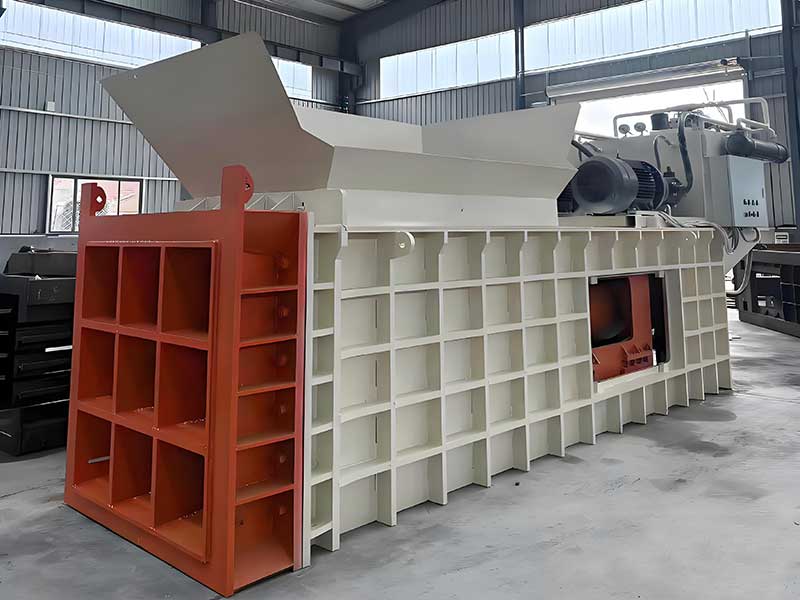
Investment decision framework.
-
ROI Calculation Matrix
Volume Ideal Type Payback 10-Year Value <2 tons/day Vertical 10-15 mo $186K 2-5 tons/day Semi-auto 11-13 mo $412K 5-12 tons/day Horizontal 9-12 mo $1.2M >12 tons/day Automated 7-9 mo $3.7M+ -
Future-Proofing Considerations Avoid these purchase errors:
- Choosing vertical for planned expansion
- Ignoring labor cost projections
- Overlooking energy certifications
- Accepting limited automation options
-
Jukun ROI Assurance Our buyer protection:
- Productivity guarantee clauses
- Free capacity forecasting
- 5-year ROI validation
- Trade-in upgrade options
Conclusion
Match baler type to daily volume and space constraints - horizontal for efficiency at scale, vertical for compact low-volume solutions.