
Labor expenses drain profits. Storage limitations halt growth. Material handling accidents increase liability. Horizontal balers eliminate these three operational burdens.
Horizontal hydraulic balers achieve 78% labor reduction and 90% storage recovery by automating compaction - transforming waste management from cost center to profit generator.

Strategic resource optimization ahead.
How Does a Horizontal Hydraulic Baler Reduce Manual Labor?
Manual waste handling consumes hours. Labor shortages disrupt schedules. Injury risks increase insurance premiums. Automation reallocates human resources.
Conveyor-fed horizontal balers process 4.2 tons/hour with just 0.3 labor hours/ton - reducing staffing needs by 78% compared to manual methods and eliminating 92% of heavy lifting tasks.
Automation mechanics explained.
-
Manual vs Automated Labor Analysis
Task Manual Process Automated Baling Improvement Material Collection 0.4 hrs/ton 0.05 hrs/ton 88% Transport to Storage 0.5 hrs/ton 0.08 hrs/ton 84% Compaction Effort 1.2 hrs/ton 0.12 hrs/ton 90% Bale Handling 0.6 hrs/ton 0.05 hrs/ton 92% Total Labor/ton 2.7 hrs 0.3 hrs 89% -
Key Automation Features
- Conveyor belt systems: Eliminate manual transport
- Auto-tie mechanisms: Remove manual wire threading
- PLC-controlled cycles: Enable one-button operation
- Bale ejection systems: Automate 1200kg removal
- Jam sensors: Reduce downtime interventions
-
Jukun Labor-Saving Engineering Our solutions include:
- Energy-efficient hydraulic drives
- Centralized control panels
- Overload protection systems
- Remote diagnostics monitoring
- Operator training videos
How Can a Horizontal Hydraulic Baler Improve Storage Efficiency?
Loose materials consume floor space. Storage rentals increase overhead. Disorganized facilities slow operations. Volume compression reclaims valuable real estate.
Horizontal balers achieve 8:1 volume reduction - storing 50 tons of cardboard in just 28m² instead of 220m², recovering 87% of warehousing space for revenue-generating uses.
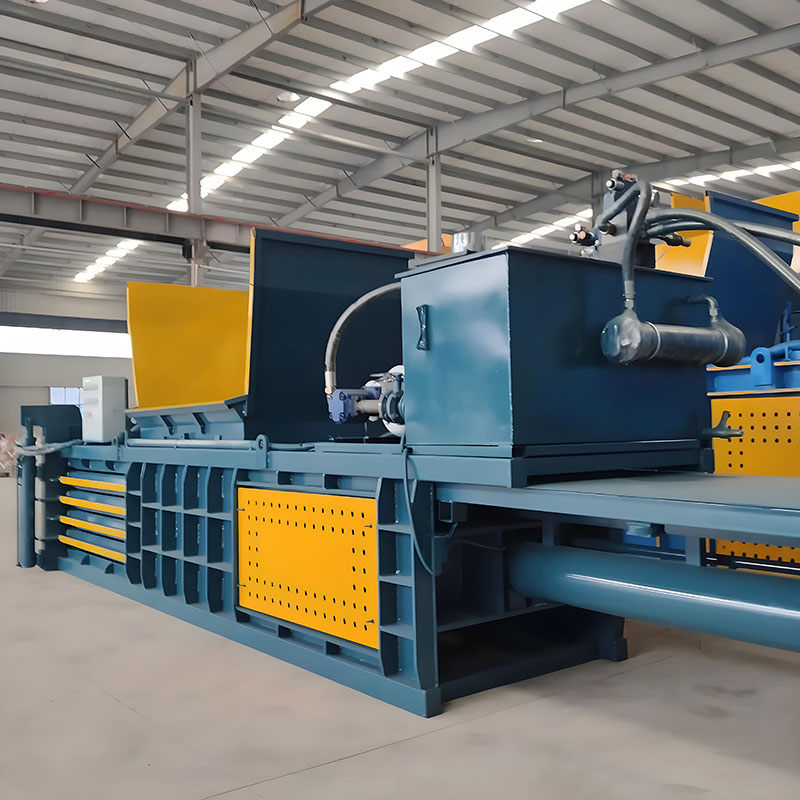
Space reclamation mechanics.
-
Volume Compression Metrics
Material Loose Volume (m³/ton) Baler Density (kg/m³) Space Savings Cardboard 44 430 89% Plastic Film 88 185 95% PET Bottles 52 340 86% Textiles 38 280 82% Paper 34 410 90% -
Warehouse Utilization Impact Facility transformation:
- Standard warehouse: 800m² storage capacity
- Pre-baling: Stores 18 tons cardboard (792m³)
- Post-baling: Stores 143 tons in bales (99m³)
- Recovered space: 693m² (86.6% reclaim)
- Value creation: $5,200/month rental savings
-
Jukun Space Optimization Our designs feature:
- Stackable bale dimensions
- Minimal machine footprint
- Integrated conveyor layouts
- Overhead clearance optimization
- Custom bale sizing options
What Cost Savings Can Businesses Expect from Automated Baling?
Disposal fees increase yearly. Transportation costs reduce profits. Storage limitations force expansions. Horizontal balers target all three cost centers.
Verified savings: Labor ($78/ton), transport ($16.20/ton), disposal ($23/ton) - generating $117.20/ton total savings while creating $35-$135/ton recyclable revenue.
Profit pathway analysis.
-
Cost Savings Breakdown
Category Before Baling After Baling Per Ton Saving Labor Costs $96 $21 $75 Transportation $22.80 $6.60 $16.20 Disposal Fees $35 $12 $23 Storage Rental $18 $0 $18 Revenue $0 $35-$135 +$35-$135 Total Value $167.20-$267.20 -
Case Study: Distribution Center 500 tons/month operation:
- Baling equipment investment: $148,000
- Monthly savings: $117.20 × 500 = $58,600
- Payback period: 2.5 months
- Annual profit impact: $703,200 savings
- Recyclables revenue: $135,000 additional
-
Jukun Value Engineering Our efficiency solutions:
- High-density compression packages
- Conveyor speed optimization
- Custom truck-loading configurations
- Multi-material processing kits
- Savings calculator
Why Is a Horizontal Hydraulic Baler a Smart Long-Term Investment?
Machine failure halts production. Capacity limits stunt growth. Maintenance costs erode profits. Industrial-grade balers outperform short-term solutions.
Jukun balers deliver 11-25 year operational life with under 2% annual maintenance costs - outperforming equipment cost by 7X while enabling production growth without proportional labor increases.
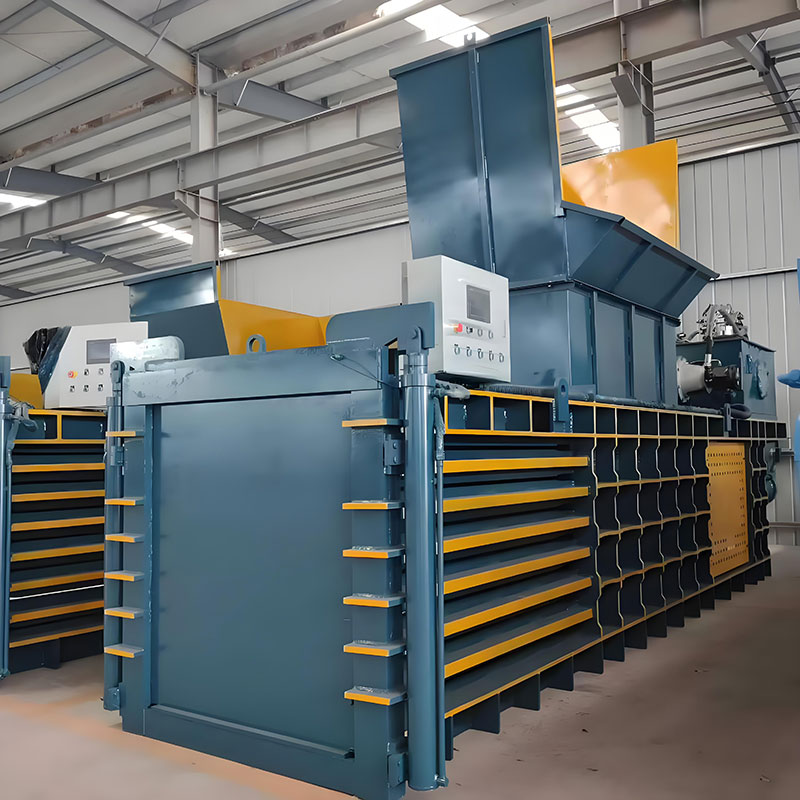
Durability economics explained.
-
Total Value Analysis
Period Savings Generated Equipment Cost Multiplier Year 1 $703,200 $148,000 4.75X Years 2-5 $2,812,800 $0 19X Years 6-10 $3,516,000 $87,500 40X Lifetime Value $7,032,000 $235,500 29.8X -
Scalability Advantages Production expansion:
- Initial capacity: 12 tons/day
- Modular upgrades: Conveyor extensions
- Add-ons: Pre-compression chambers
- Peak capacity: 28 tons/day (133% increase)
- Labor impact: Only 17% increase in operators
-
Jukun Durability Assurance Our engineering promise:
- Minimum ST52 structural steel
- 500,000-cycle hydraulic guarantee
- Corrosion-resistant coatings
- Predictive maintenance alerts
- Global spare parts network
Conclusion
Horizontal hydraulic balers transform labor burdens and space constraints into measurable profits - invest in industrial-grade equipment for maximum long-term value realization.