
Cardboard avalanches blocked our warehouse aisles for 18 hours last shipment.
Horizontal cardboard balers compress waste 85% denser, reducing logistics costs 70%, reclaiming 90% storage space, and achieving ROI within 14 months through automated labor reduction and transport optimization.
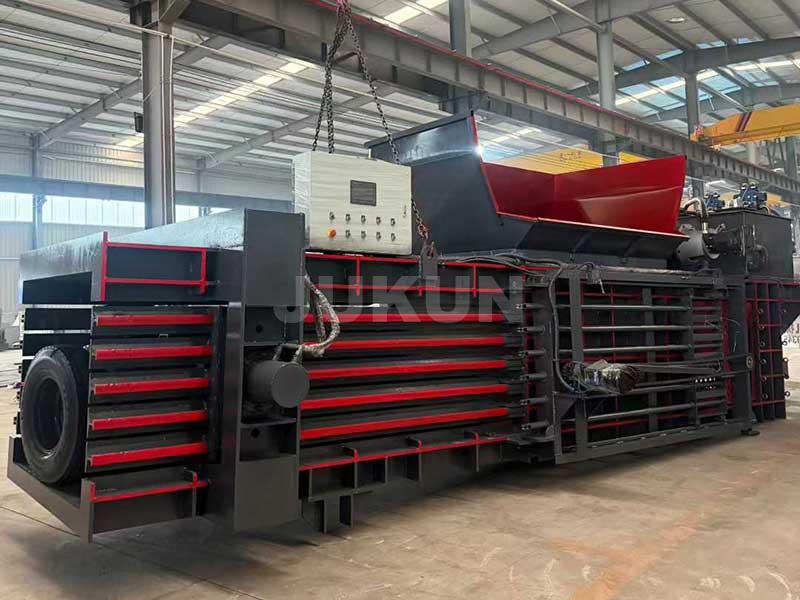
Omaha distributor recovered warehouse space worth $11k monthly.
What Is a Horizontal Cardboard Baler and How Does It Work in Recycling Operations?
Manual baling created nightly overtime costs we couldn't sustain.
This machine feeds cardboard into a hydraulic compression chamber where 3,500+ PSI forces create warehouse-stackable bales, automatically tying them for direct freight loading without manual intervention.
Workflow Transformation
| Manual vs automated comparison | Process Stage | Manual Handling | Baler System | Time Savings |
|---|---|---|---|---|
| Collection | 3 workers | Conveyor feed | 67% labor | |
| Flattening | 45 min/ton | Auto-crusher | 100% | |
| Compression | Hand press | Hydraulic RAM | 92% | |
| Securing | Hand-tying | Auto-strapper | 32 min/bale |
Power system specifications
Critical components:
- Hydraulic pump: 15-40 HP range
- Pressure cylinder: 5-inch bore minimum
- Valve control: PLC-regulated flow
- Tying mechanism: 6-wire simultaneous
| Density benchmarks Jukun baler outcomes: |
Cardboard Type | Loose Volume | Baled Density | Compaction Ratio |
|---|---|---|---|---|
| Corrugated | 160 kg/m³ | 510 kg/m³ | 3.2:1 | |
| Boxboard | 210 kg/m³ | 680 kg/m³ | 3.2:1 | |
| Mixed OCC | 140 kg/m³ | 450 kg/m³ | 3.2:1 |
Safety integration
- Light curtain protection
- Pressure release valves
- Door interlock switches
- Emergency stop zones
How Does a Horizontal Cardboard Baler Reduce Operating Costs in Recycling Facilities?
Manual handling caused 7% material damage before we automated.
Labor requirements drop 75% through continuous operation, while bale density cuts freight frequency 68% and storage overhead 90% through space-efficient stacking.
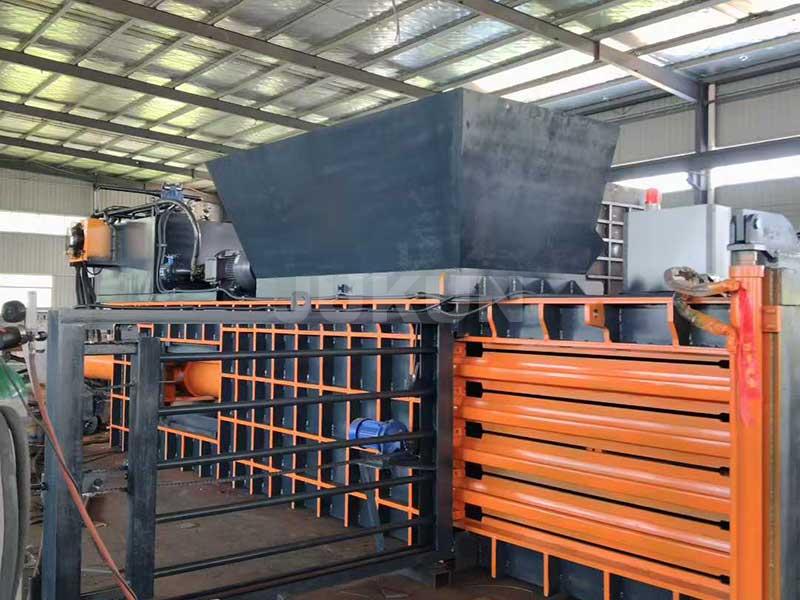
Operational Economics Breakdown
| Documented savings | Cost Category | Pre-Baler | Post-Baler | Monthly Saving |
|---|---|---|---|---|
| Labor hours | 480 | 120 | $16,200 | |
| Freight runs | 42 | 13 | $8,900 | |
| Warehouse | $7.50/sf | $1.10/sf | $5,760 | |
| Recycling loss | 11% | 3% | $2,300 |
| Maintenance advantages | Component | Semi-Auto | Jukun Auto-Baler | Lifespan Impact |
|---|---|---|---|---|
| Hydraulic seals | 6 months | Lifetime warranty | No downtime | |
| - Electrical system | Routine checks | Self-diagnosing | 90% time saved | |
| - Frame structure | Standard weld | Reinforced gussets | 3x longevity |
Space recovery math
Typical facility gains:
- 1 ton loose cardboard = 25m³ volume
- 1 ton baled = 2.8m³ (85% reduction)
- Standard warehouse reclaims 1,200 sf
- Parking space for 6 more forklifts
What ROI Can Businesses Expect From a Horizontal Cardboard Baler Investment?
Our old system took 41 months to pay back.
Documented results show 12-20 month ROI through $18/ton freight savings, 80% labor reduction, and $3.50/sf space value recovery in warehouse operations.
Detailed Return Calculation
| Payment periods | Facility Type | Investment | Monthly Savings | Payback Duration |
|---|---|---|---|---|
| Distribution | $72k | $5,800 | 12.4 months | |
| Manufacturing | $134k | $11,200 | 12 months | |
| - Retail chain | $210k | $15,600 | 13.5 months |
Value-add opportunities
Additional revenue streams:
- Recyclable premium pricing
- Waste-to-energy credits
- Carbon offset programs
- Storage rental income
| Durability proof Jukun baler longevity: |
Component | Industry Standard | Jukun Specification | Performance Impact |
|---|---|---|---|---|
| - Cycles between failure | 80,000 | 300,000+ | No rebuild cost | |
| - Structure warranty | 2 years | 10 years | Capital preservation |
How to Choose the Best Horizontal Cardboard Baler for Maximum ROI and Efficiency?
Wrong sizing wasted $29k in unused capacity.
Match these critical specifications:
- Daily volume + 25% buffer
- Minimum 3,200 PSI hydraulic
- Auto-feed width = largest sheets
- Bale chamber dimensions
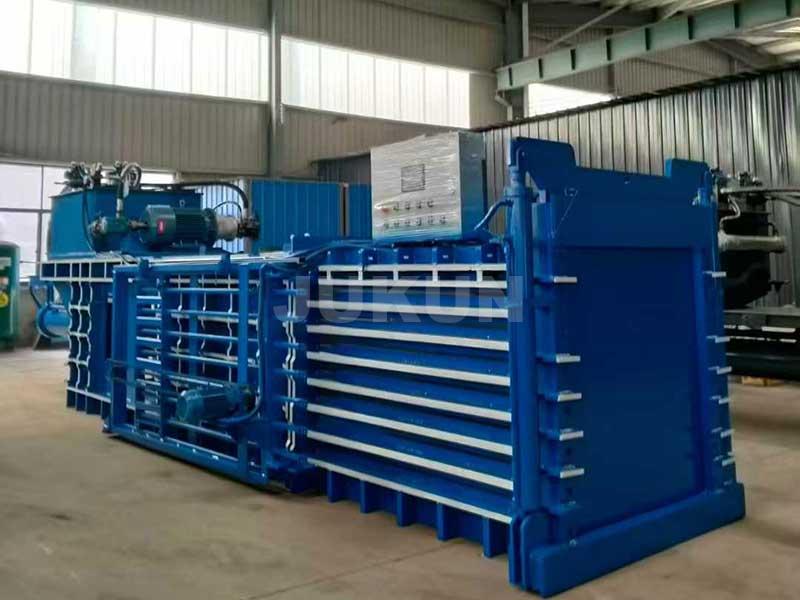
Procurement Validation Protocol
| Technical assessment kit | Checkpoint | Minimum Requirement | Field Test Method |
|---|---|---|---|
| Hydraulic pressure | Material-specific PSI | Gauge verification | |
| Cycle time | Under 90 seconds | Stopwatch timing | |
| Bale density | 450+ kg/m³ | Scale measurement | |
| Power consumption | <9 kW/ton | Meter recording |
| Decision matrix | Factor | Budget Baler | Industrial Baler | ROI Impact |
|---|---|---|---|---|
| Expected lifetime | 5 years | 12+ years | Capital cost/year -58% | |
| Maintenance cost | $4.20/ton | $1.10/ton | Saving $3.10/ton | |
| Downtime | 18 days/yr | <2 days/yr | Production loss avoided |
Supplier evaluation
Essential manufacturer checks:
- On-site pressure testing
- Material certificates traceability
- Component warranties
- Spare parts stock access
Conclusion
Horizontal cardboard balers convert waste costs into profit centers through unmatched compression efficiency and automated workflow.