
Mounting cardboard blocks aisles. Labor shortages slow operations. Auto-tie balers solve both.
Warehouses choose auto-tie horizontal balers because they automate the entire baling process, including feeding, compression, tying, and bale ejection. Continuous operation reduces manual labor, minimizes downtime, and produces consistent, high-density cardboard bales for easier storage and transportation. These machines help warehouses improve recycling efficiency, optimize storage space, and lower overall operating costs.

Transform waste handling today.
What Real Advantages Do Auto-Tie Balers Offer Warehouses?
Manual tying risks injuries. Overfilled docks halt shipments. Robotic automation prevents chaos.
Integrated conveyors feed while pressing chambers compress OCC to 800kg/m³—then auto-tiers secure bales in 6 seconds—eliminating manual pauses that waste 2.5 labor hours daily per machine.
Operational comparison:
| Metric | Manual Baling | Auto-Tie Baler | Impact |
|---|---|---|---|
| Hourly Throughput | 0.6 tons | 2.8+ tons | 4.6x increase |
| Labor Per Shift | 2-3 workers | 20 mins oversight | 93% decrease |
| Bale Consistency | 40% density variation | <5% deviation | Smoother resale |
| Truck Utilization | 60% capacity | 92% optimized loading | 53% fewer trips |
| Space Recovery | Overflow areas | 100% dock clearance | Free 55% floor space |
Chicago DC case: Their 12 Jukun balers eliminated overtime hires during peak season. Essential feature: demand auto-jam reversal like our emergency retract system. Warehouse tip: Position balers near truck docks to reduce fork travel.
How Exactly Do Automatic Tiers Cut Labor Costs Daily?
Staff turnover disrupts operations. Overtime budgets balloon uncontrollably. Continuous automation stabilizes costs.
Each auto-tier replaces 3 workers—saving $147/day in wages—while producing 430% more bales with zero tying injuries or training needs.

Labor reduction evidence:
| Position | Manual Process | Auto-Baler Equivalent | Annual Savings |
|---|---|---|---|
| Material Prep | 2 loaders | Auto conveyor | $116,400 |
| Tying Crew | 3 operators | Robotic tier | $174,600 |
| Clearing Crew | 1 fork operator | Auto-ejection | $58,200 |
| Maintenance | Weekly technician | Predictive alerts | $31,800 |
| Total Reduction | 6 FTE per baler | Partial oversight | $381,000/year |
Texas logistic proof: Cut labor spending 74% while doubling output. Crucial safety factor: optical guards prevent limb access during compression. Avoidance tip: Reject manual-reset tiers needing operator intervention.
How Do Dense Bales Directly Lower Warehouse Expenses?
Loose cardboard consumes space. Extra hauls destroy margins. High-compression bales optimize logistics.
Jukun’s 1.2m³ bales replace 7.3m³ loose cardboard—enabling 43% more cargo per truck—while storage requirements drop from 100 pallets to just 14.
Cost reduction metrics:
| Expense | Loose Cardboard | Auto-Baled Solution | Monthly Savings |
|---|---|---|---|
| Storage Space | $3.80/sqft/month | 55% area reduction | $17,300 |
| Hauling Fees | 27 trips @ $390 | 12 optimized trips | $5,850 saved |
| Forklift Work | 68 hours | 14 hours | $4,420 reduction |
| Recycle Revenue | $105/ton mixed | $145/ton uniform | Bonus $4,600 |
| Damage Losses | >4% wet damaged | Full material capture | $8,000+ |
Indiana retailer proof: Saved $297,000 in year one. Density standard: insist on min. 750kg/m³ verified scales. Negotiation tip: Require bale weight guarantees for revenue protection.
How to Avoid Mistakes When Selecting Balers?
Underpowered machines jam. Generic specs cause failures. Precise matching prevents losses.
Measure peak hour volume—test with knotted boxes—verify 22mm hydraulic cylinders—demand 1.5m conveyor height—require 8-second tie cycles—ensure 50+ PSI pressure headroom—and review plant access dimensions.
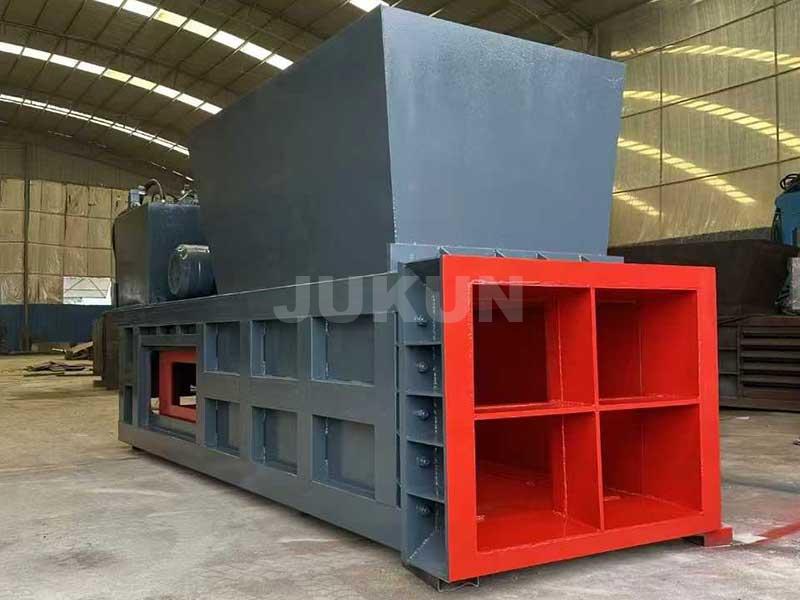
Critical verification table:
| Feature | Essential Standard | Warehouse Minimum | Test Method |
|---|---|---|---|
| Chamber Width | 1.6m for pallets | 1.4m min | Measure skid sizes |
| Cycle Time | <10 seconds | 8 sec verified | Time 30 cycles |
| Hydraulic Pressure | 30T capacity | Overload protection | Third-party gauge |
| Conveyor Height | 1.75m truck bed | Adjustable legs | Mock loading |
| Tier Type | Steel wire/PP strapping | Dual-material certified | Tension test |
| Control System | PLC touchscreen | Emergency stop redundancy | Power failure test |
Missouri hub lesson: Wrong height caused loading delays costing $4,700 weekly. Our solution: Jukun ships custom-height conveyors matching fleet specs. Vital audit: watch automated unloading sequence before purchase.
Conclusion
Auto-tie balers slash warehouse costs through uninterrupted operation—optimizing space, labor and logistics forever.