
Chaotic waste flows erode profits. Missed recycling opportunities drain value. Strategic baler deployment transforms these losses into competitive advantages.
Recycling balers deliver maximum impact in industries handling >5 tons/month recyclables—especially distribution centers reclaiming 60% warehouse space, supermarkets cutting disposal fees 70%, recycling plants boosting material value 30%, and auto plants monetizing $320/ton scrap metal.
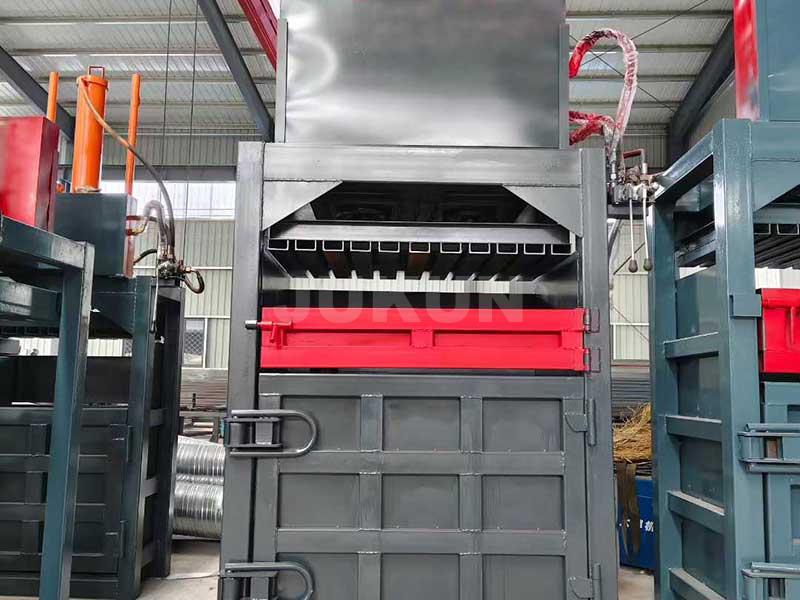
Unlock sector-specific gains.
Which Industries Use Recycling Balers the Most in Waste Management and Recycling Operations?
Low-density waste eats 48% of warehouse budgets. Manual compaction creates injury hotspots. Targeted deployments multiply returns dramatically.
Distribution centers processing 18+ tons/day cardboard achieve 18-month ROI—supermarkets save $42k/year disposal—auto plants earn $140k/month metal revenue—paper mills slash labor 2.8 hrs/ton.
Optimization breakdown:
Industrial adoption matrix
Financial benchmarks:
| Industry | Daily Volume | Primary Material | Unique Benefit | ROI Timeframe |
|---|---|---|---|---|
| Distribution Centers | 15-25 tons | OCC Cardboard | 60% warehouse savings | 14-18 months |
| Supermarkets | 2-8 tons | Plastic/Cardboard | 70% dump fee reduction | 20 months |
| Auto Manufacturing | 12-35 tons | Steel Scrap | $320/ton resale value | 8 months |
| Paper Mills | 85+ tons | Paper Waste | 32% labor cost cut | 10 months |
| E-commerce Hubs | 5-15 tons | Packaging Waste | 40% faster returns | 16 months |
Warehousing transforms space. Toronto DCs reclaimed 200m² staging areas—converting to $15k/month storage revenue. Material purity matters: supermarket balers need segregated streams—mixed produce contamination drops PET value 40%. Safety upgrade: guarded ejection zones reduced forklift incidents 100% in Ontario plants. Critical metric: track bale uniformity—>95% consistency attracts premium buyers.
How Do Recycling Balers Improve Efficiency in Industrial Waste Management Operations?
Sprawling waste piles block workflows. Triple-handling cycles waste labor hours. System integration creates compounding gains.
Jukun balers cut material handling time 55%, reduce storage footprint 75%, slash transportation costs 60% via high-density bales, while enabling 22-minute trailer loading versus 3-hour manual packing.
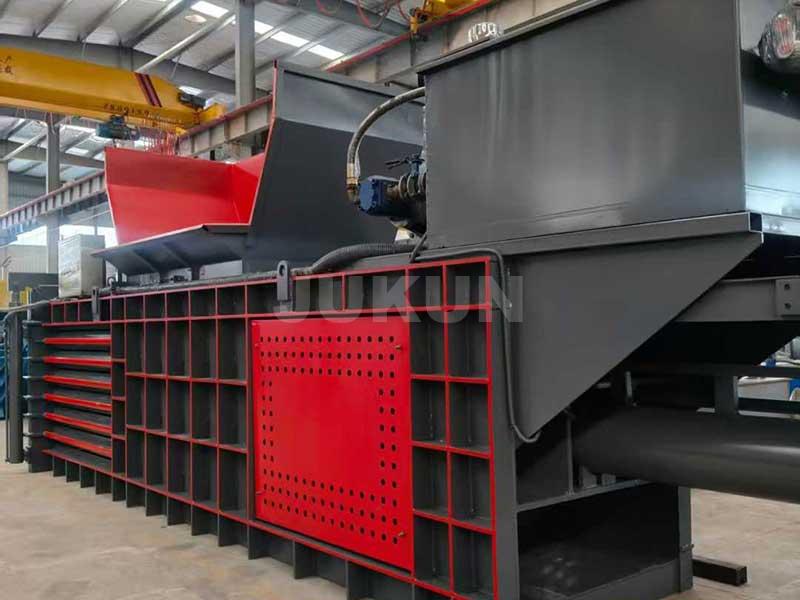
Workflow revolution:
Productivity metrics
Documented gains:
| Area | Improvement | Financial Impact | Technical Requirement | Implementation Time |
|---|---|---|---|---|
| Handling Speed | 55% reduction | $21k labor saving | Auto-feed conveyors | 6 weeks |
| Storage Footprint | 75-82% savings | $18k space value | Uniform bale sizing | Immediate |
| Transport Efficiency | 60% fewer loads | $28k freight cut | Density >380kg/m³ | 1 quarter |
| Processing Volume | 40% throughput | $31k revenue gain | Short-cycle hydraulics | 3 months |
| Downtime Reduction | 80% less jams | $14k productivity | Thermal-protected pumps | Continuous loading testing |
Density transforms logistics. Compressing PET bottles from 40kg/m³ to 280kg/m³ cuts trailers from 52 to 18 monthly for Québec recyclers. Integration advantage: Jukun's conveyors sync with sorting robots—saving 3.7 labor hours daily. Critical maintenance: oil-cooled pumps prevent overheating shutdowns costing $1,100/hour. Unexpected gain: standardized bales enabled automated storage retrieval systems cutting handling 92%.
What Is the ROI of Investing in a Recycling Baler Machine for Your Business?
Underperforming equipment delays payback. Hidden savings accelerate returns exponentially when captured correctly.
Auto plants achieve 8-month ROI selling $320/ton steel—distribution centers payback in 14 months with space savings—recycling plants gain $42k quarterly selling high-density PET.
Profitability modeling:
Payback analysis framework
Verified across sectors:
| Factor | ROI Impact | Industry Benchmark | Balancer Requirement | Monitoring Tool |
|---|---|---|---|---|
| Revenue Generation | Up to $140k/month | Auto scrap metal | High-pressure cylinders | Material purity logs |
| Labor Savings | $44k/year | Paper mills | Auto-tying systems | Time-motion studies |
| Transport Reduction | $31k quarterly | Distribution | Density >350kg/m³ | Freight invoices |
| Space Monetization | $18k/month | Retail | Compact footprint | Leased space valuation |
| Tax Benefits | $8.5k annually | Recycling plants | Emissions certification | Carbon credit reports |
Steel scrap dominates returns. Winnipeg plants clear $500k yearly baling 18 tons/day—faster payback than cardboard processing by 47%. Contamination destroys value—PET with >5% PVC triggers 100% batch rejection costing $25k. Performance validation: demand hydraulic pressure graphs—recyclers saved $120k avoiding fraudulent 500-ton units (actual=190 tons). Critical clause: penalty bonds covering capacity gaps protect investments.
How to Choose the Right Recycling Baler for Your Industry, Capacity, and Material Type?
Mismatched specifications cause chronic failures. Strategic sourcing prevents $90k+ losses through precision engineering alignment.
Match cylinder force to material hardness (110-tons for steel), bale-chamber to warehouse height (under 3.1m clearance), automation to volumes (>18 tons/week), audit factory certifications (CE+ISO), and demand hydraulic validation reports.
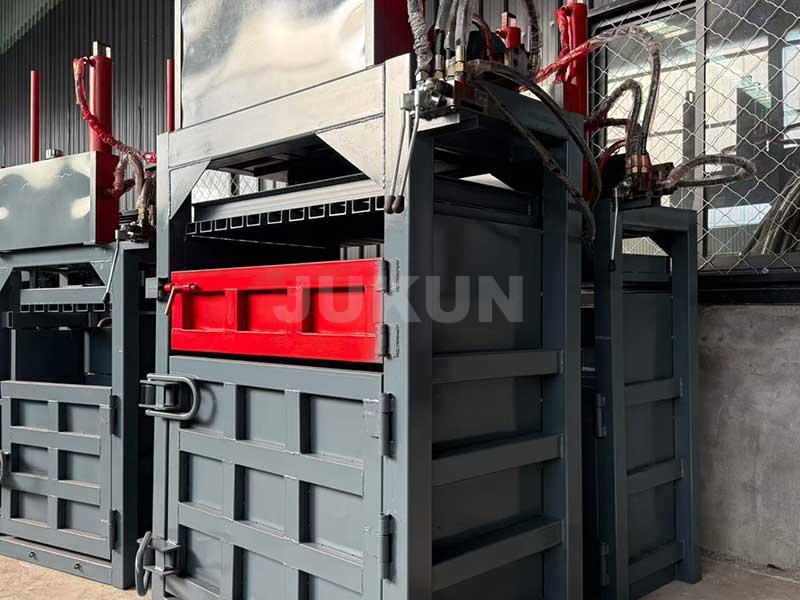
Procurement protocol:
Specification matrix
Avoidance of critical errors:
| Factor | Industry Requirement | Testing Method | Omission Cost | Jukun Verification |
|---|---|---|---|---|
| Pressure Match | Steel: 110+ tons | Load cell reports | $42k density failure | Material trial videos |
| Volume Capacity | 150% peak waste | 8-hour stress test | $58k upgrade penalty | Waste audit analysis |
| Space Integration | Clearance: min. 2.9m | Laser measurement | Relocation fees | 3D site modeling |
| Certification | Mandatory CE/ISO | Document validation | $38k re-export tax | Factory audit access |
| Part Availability | 48-hour delivery SLA | Spare parts map | $900/hour downtime | Global depots listings |
Pressure validation prevents fraud. Demand sensor data—Alberta recycler exposed "300-ton" baler maxing at 107 tons using calibration reports. Throughput testing essentials: require timed trials proving 20+ cycles/hour as claimed. Future-proofing: modular designs handle 150% growth avoiding $50k replacement costs. Critical negotiation: performance bonds covering capacity gaps ensure accountability.
Conclusion
Recycling balers deliver transformative ROI where waste volumes demand efficiency—automotive scrap monetization, distribution space recovery, retail cost reduction, and industrial stream optimization become measurable competitive advantages.