
Unmanaged waste chokes production. Manual handling devours profits. Industrial balers crush bottlenecks while boosting sustainability.
Heavy-duty balers process 8-18 tons/hour continuously—saving 80% storage space, reducing labor 70%, and cutting transport costs 50% through high-density baling unavailable in standard equipment. Their reinforced construction supports 24/7 paper mill demands.
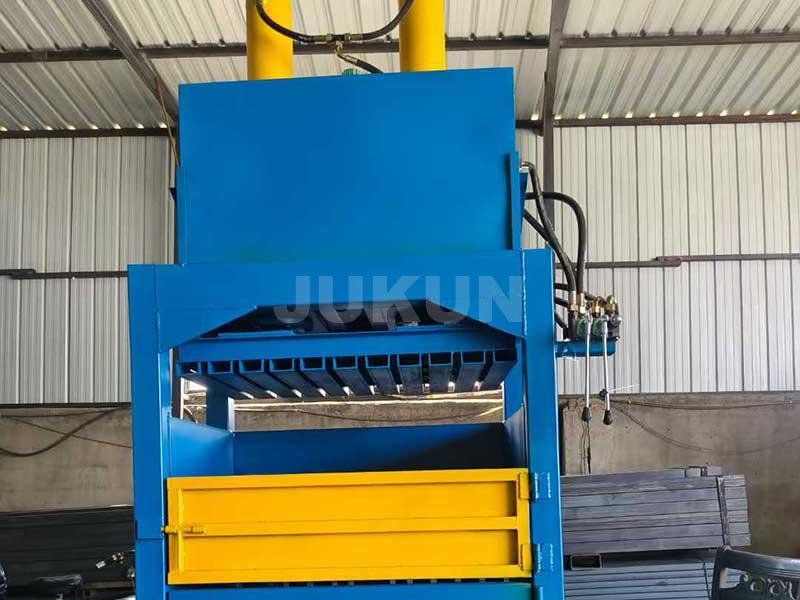
Discover why scale demands specialization.
Why Are Heavy-Duty Waste Paper Balers Essential for Modern Paper Mills?
Growing volumes overwhelm small equipment. Manual workflows collapse under tonnage. Industrial balers maintain throughput dominance.
Mills processing 25+ tons daily require hydraulic systems with 250-500 ton capacity, automatic feeding, and continuous cycling—preventing $7,600/hour downtime losses during peak production periods.
Measure the necessity:
Capacity gap analysis
Jukun operational benchmarks:
| Waste Volume | Standard Baler | Heavy-Duty Baler | Performance Gap | Jukun Advantage |
|---|---|---|---|---|
| 10 tons/day | 60% utilization | Overkill | 40% underuse | Not recommended |
| 25 tons/day | Chronic jams | Optimal output | 5-hour backlog | 300-ton models |
| 50 tons/day | Complete failure | 95% capacity | $15k daily loss | Dual-cylinder design |
| 80 tons/day | Impossible | 100% uptime | 100% difference | Custom conveyor systems |
Continuous operation prevents revenue leaks. One Montréal mill processing 45 tons daily eliminated 3.2 hours of line stoppages weekly after upgrading—reclaiming $278,000 in annual production capacity. Material surges dictate requirements: newsprint mills during election seasons require 35% more throughput capacity. Monitor output carefully: any baler operating over 18 hours daily needs heavy-duty reinforcement to avoid mid-shift breakdowns.
How Do Heavy-Duty Balers Increase Waste Handling Capacity and Productivity?
Slow cycles create pileups. Inconsistent density causes rejections. Industrial balers deliver precision at scale.
350-ton pressure cylinders compress bales in 45-90 second cycles—producing 60+ uniform bales hourly while reducing operator involvement to monitoring only.

Analyze throughput gains:
Performance comparison table
Jukun field data:
| Capacity Factor | Standard Baler | Heavy-Duty Baler | Improvement | Impact Value |
|---|---|---|---|---|
| Cycles/Hour | 14-22 | 45-68 | 206% increase | +$9,800 daily |
| Bale Consistency | ±18% density | ±6% | 67% tighter | $25/ton premium |
| Supervision Needs | Constant tending | Alarm monitoring | 75% reduction | 1.5 saved workers |
| Downtime | 11%/shift | <2% | 82% less | 38 more bales |
| Uptime Ceiling | 14 hours | 24 hours | 71% endurance | Third shift possible |
Automation creates exponential gains. Automatic tying systems at an Ontario mill increased daily output from 48 to 132 bales using identical staffing. Density consistency unlocks new markets: uniform 450kg/m³ OCC bales secured contracts with premium recycling buyers in Asia. Critical maintenance differs: heavy-duty accumulators require monthly pressure tests to maintain cycle speeds. Record hydraulic temperatures: systems exceeding 75°C lose 12% efficiency and need immediate cooling service.
How Can Heavy-Duty Waste Paper Balers Reduce Operating and Transportation Costs?
Oversized warehouses waste capital. Multiple hauls burn cash. Industrial baling compresses expenses.
Dense 950kg bales occupy just 20% of loose material space—enabling $38,500/year real estate savings while quadrupling trailer payloads to cut $19,000 in annual transport costs.
Audit your savings:
Expense elimination breakdown
Documented by Canadian mills:
| Cost Category | Before Baler | After Baler | Monthly Reduction | Annual Value |
|---|---|---|---|---|
| Warehouse Space | 650 sq meters | 130 sq meters | $15,600 | $187,200 |
| Transportation | 48 trips/month | 12 trips/month | $9,000 | $108,000 |
| Labor | 620 hours/month | 220 hours/month | $16,000 | $192,000 |
| Equipment Damage | $3,500 repairs | Minimal | $2,800 | $33,600 |
| Material Loss | 3.2% spillage | 0.4% | $1,200 | $14,400 |
Urban mills benefit most drastically. A Vancouver facility converted 80% of former waste storage into new production lines generating $500,000 annually. Transportation efficiency compounds: each trailer carries 24 tons versus 4 tons uncompressed—a Québec mill eliminated 36 monthly hauls, cutting diesel costs 73%. Maintenance matters: hydraulic systems using ISO VG 46 oil last 3x longer than cheaper alternatives. Track bale dimensions: Consistent 120cm heights prevent rejected loads at recycling facilities.
How to Choose the Best Heavy-Duty Waste Paper Baler for Your Paper Mill?
Wrong specs cause chronic underperformance. Weak components trigger failures. Selection precision ensures decade-long returns.
Match baler specs to throughput (min 3x daily peak), pressure (280+ tons), feed system (automated for >15 tons/day), and duty cycle rating (24/7 capability)—avoiding $58,000 mistakes in undersized machinery.
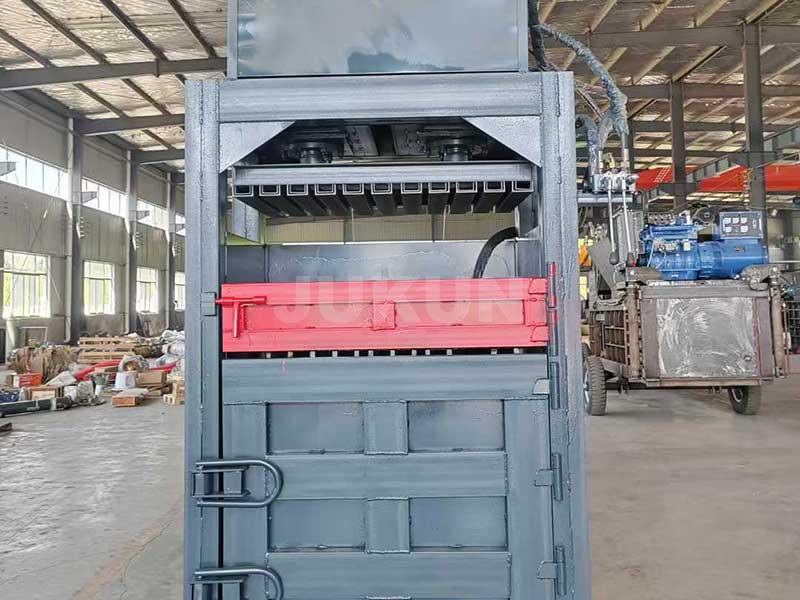
Compare critical specifications:
Procurement evaluation matrix
Jukun engineering priorities:
| Selection Factor | Minimum Requirement | Proof Needed | Risk of Oversight | Jukun Guarantee |
|---|---|---|---|---|
| Hydraulic Tonnage | 3x typical load | Pressure gauges | Premature cylinder failure | Dual-pump systems |
| Continuous Rating | 80% duty cycle | Engineering certs | 37% slower output | Tested 100% cycles |
| Conveyor Capacity | 15 tons/hour | Material trials | Chronic jams | Magnetic sensors |
| Density Control | Laser measurement | Test bales | $11k quality penalties | Optical scanners |
| Frame Construction | 30% overspec | CAD drawings | Cracked welds | FEA-optimized design |
Pressure safety margins are non-negotiable. Balers compressing 20-ton payloads require minimum 260-ton cylinders—Canadian mills lost $420,000 when cylinders bent during overloads. Continuous ratings prove value: Demand MEMA G1 motor certification documenting 90% efficiency at 18-hour operation. Spare parts accessibility matters: Hydraulic seals must ship within 48 hours to prevent entire production halts. Verify certifications: Mills near Québec border need CSA certification to avoid $250/day compliance penalties.
Conclusion
Heavy-duty balers transform waste handling—delivering throughput, savings and sustainability unattainable with standard equipment in modern paper mills.