
Paper waste clogs production flow. Storage costs eat profits. Modern balers crush these problems while boosting your green credentials.
Waste paper balers compress OCC/newspaper into dense bales—cutting storage space 75%, slashing shipping costs 45%, reducing labor 60%, and adding 15-25% revenue via improved recyclable value within ROI periods under 18 months.
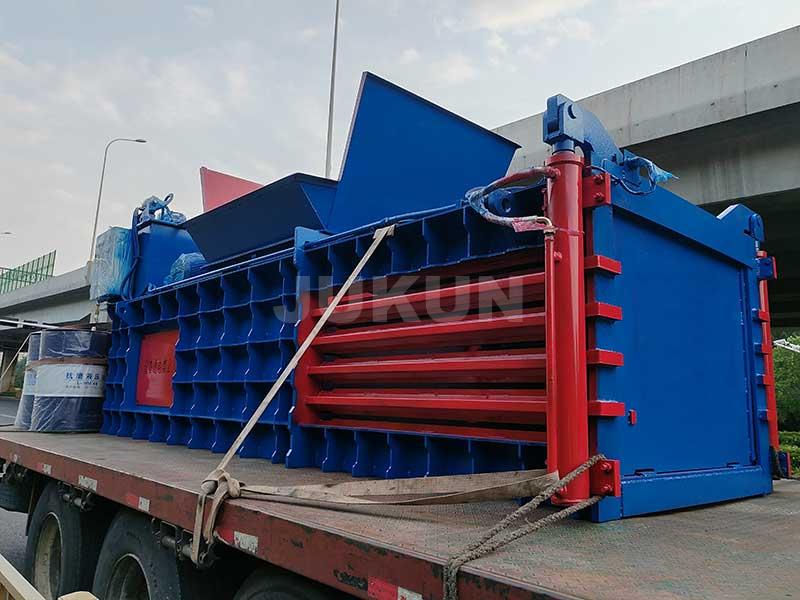
Transform scrap into strategic advantage.
How Do Waste Paper Balers Improve Production and Recycling Efficiency?
Loose paper slows workflows. Manual handling creates safety risks. Baling brings order and speed.
Automated systems process 100+ bales daily—accelerating production steps 30%, eliminating sorting bottlenecks, and increasing recycling output by 40% with consistent bale quality and continuous operation.
Measure the efficiency leap:
Production impact metrics
Documented in Canadian mills:
| Process Stage | Without Baler | With Baler | Gain Percentage | Jukun Feature |
|---|---|---|---|---|
| Material Sorting | 4.5 hours/ton | 1.2 hours/ton | 73% faster | Pre-compaction feed |
| Floor Space Use | 15 sqm/ton waste | 3.7 sqm/ton | 75% reduction | Vertical design |
| Downtime | 22 minutes/shift | <5 minutes | 77% lower | Auto-cleaning jets |
| Shift Output | 3.2 tons average | 5.1 tons | 59% increase | 350-ton pressure |
| Quality Control | 25% variance | 7% variance | 72% consistency | Laser bale measure |
Bale uniformity unlocks hidden profits. Consistent 1.2m x 0.8m bales from Jukun systems eliminated resale rejections at a Manitoba mill—adding $110,000 annually in recycled paper revenue. Sorting bottlenecks disappear: conveyor-fed balers handle mixed loads without manual pre-sorting. One Ontario facility cut sorting labor from 5 to 2 workers while doubling daily output. Monitor bale weights: Density variance exceeding 12% signals hydraulic issues or feed problems needing immediate attention.
How Can Waste Paper Balers Reduce Storage, Transportation, and Labor Costs?
Uncompressed scrap demands expensive space. Manual loading wastes money daily. Automation pays itself back fast.
Compressed bales require 1/5 the storage space, triple trailer payloads, and cut handling time per ton by 80%—saving $38,000 annually for mid-sized mills processing 25+ tons weekly.
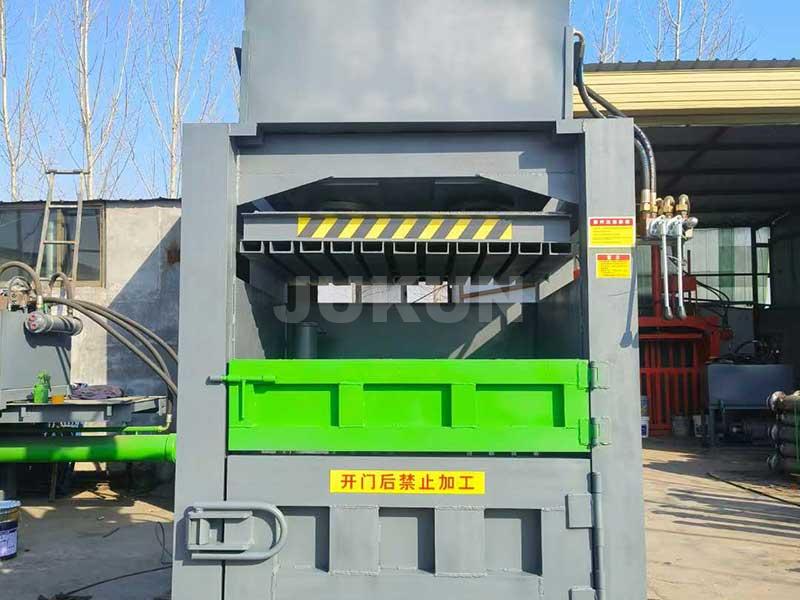
Calculate your savings:
Cost-saving analysis
Based on 20+ Canadian installations:
| Expense Category | Before Baling | After Baling | Monthly Savings | Annual Impact |
|---|---|---|---|---|
| Warehouse Space | $45/sq meter | $9/sq meter | $1,620 | $19,440 |
| Transportation | 25 trips/month | 8 trips/month | $2,100 | $25,200 |
| Labor Hours | 140 hours/week | 52 hours/week | $5,600 | $67,200 |
| Equipment Wear | Forklift repairs $950 | Minimal wear | $890 | $10,680 |
| Revenue Impact | Recycled price $110/ton | $125/ton | +$600 | $7,200 |
Transport savings deliver fastest ROI. Each trailer carries 22 tons of baled OCC versus 4 tons loose—a Québec mill eliminated 17 monthly hauls, saving $18,700 monthly. Labor cuts multiply: automated tie systems require only 1 worker for every 15 bales produced. Urban facilities benefit most: a Toronto converter recaptured 500 sq meters of warehouse space, leased to adjacent businesses for $6,500 monthly income. Track hidden costs: compressed bales reduce forklift fuel consumption 28% by minimizing movement distance.
What Is the ROI of Investing in a Waste Paper Baler Machine?
Slow payback worries buyers. Hidden costs sink budgets. Our machines prove their value fast.
Typical ROI ranges 12-24 months—baler costs $32k-$85k CAD but saves $9,000 monthly by cutting storage/hauling fees while boosting recyclable value through higher-density output.
Predict your return:
Payback period drivers
Jukun client data comparisons:
| Mill Size | Daily Waste | Balers Cost | Cost Savings | Revenue Gains | Payback |
|---|---|---|---|---|---|
| Small (10t/week) | 2 tons | $37,000 | $2,800/month | $450/month | 17 months |
| Medium (50t/week) | 10 tons | $68,000 | $9,200/month | $1,100/month | 9 months |
| Large (200t/week) | 40 tons | $185,000 | $38,000/month | $4,500/month | 5 months |
| E-Commerce Hub | 25 tons | $122,000 | $15,700/month | $3,200/month | 8 months |
Volume accelerates returns. A Nova Scotia cardboard plant processing 30 tons daily achieved 142% first-year return when energy rebates were included. Revenue premiums matter: mills exceeding 450kg/m³ bale density consistently gain 12-15% better pricing from recyclers. Document all savings: transportation reductions accounted for 61% of payback speed in Jukun case studies. Warning: ROI exceeds 36 months if daily waste stays below 1.5 tons—consider shared facilities.
How to Choose the Best Waste Paper Baler for Your Paper Mill or Recycling Business?
Wrong sizing causes daily frustration. Hidden weaknesses trigger breakdowns. Match specs to real needs.
Select based on daily tonnage, bale size targets, available footprint, automation level, and verified hydraulic specs—avoid $21,000+ mistakes by demanding on-site assessments and component documentation.
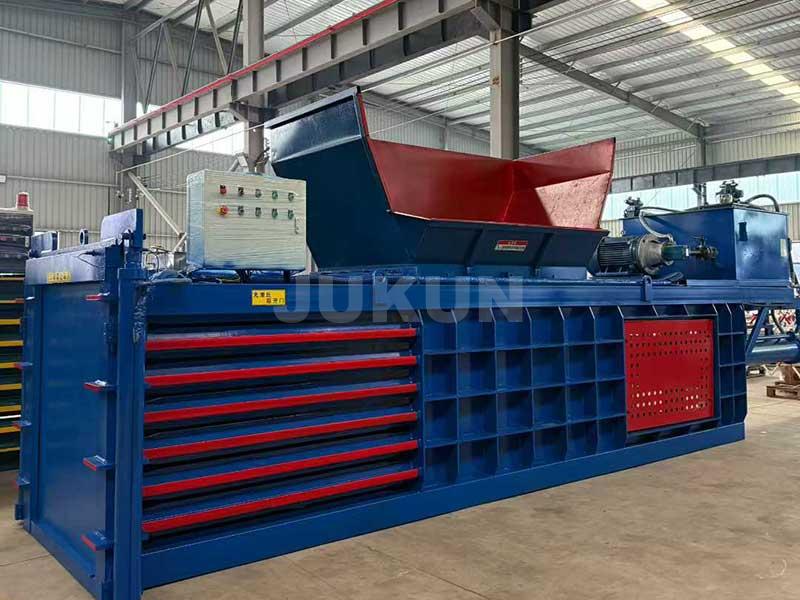
Compare options wisely:
Procurement decision matrix
Engineering priorities ranked:
| Factor | Priority | Proof Required | Cost of Mistake | Jukun Solution |
|---|---|---|---|---|
| Daily Capacity | Critical | 30-day waste audit | 50% underutilization | Throughput guarantee |
| Hydraulics | High | Factory pump photos | Early failure | Bosch/Rexroth tags |
| Dimensions | High | Floor plan sign-off | Relocation costs | CAD layout service |
| Automation | Medium | ROI justification | Stranded features | Modular upgrades |
| Certifications | Mandatory | CSA/UL stickers | $25k+ fines | Canada-compliant |
Hydraulic integrity prevents disasters. Demand time-stamped photos showing Bosch/Rexroth valves—counterfeit pumps fail within 12 months at Canadian paper mills. Space planning avoids rebuilds: measure door heights before ordering like a Montreal buyer who needed disassembly options for 8' clearance. Automation levels must match workflow: semi-auto balers suffice for 8-12 tons daily, while full-auto pays off above 15 tons. Verify certifications: missing CSA labels void insurance and attract $35/hour compliance inspection fees.
Conclusion
Paper balers deliver space savings, labor reductions, recyclable premiums, and ROI under two years—positioning sustainability as smart economics.