
Manual compression wastes labor. Storage costs spiral. Horizontal balers transform recycling profitability.
Horizontal hydraulic balers compress cardboard, plastic, and metal into dense bales 5-10x smaller than loose material—reducing labor by 50-80%, transport costs by 30-70%, and increasing resale value despite initial investment ($15k-$150k) and maintenance requirements.

Discover if this solution fits your operation.
What Are the Key Advantages, Disadvantages, and Applications of Horizontal Hydraulic Balers?
Labor costs drain profits. Space shortages limit growth. Horizontal balers solve both immediately.
Advantages include high processing speed (up to 8 tons/hour), 60-80% bale density gains, reduced labor needs, and transportation savings. Disadvantages: sizeable investment ($20k-$150k), large footprint, regular maintenance. Applications: cardboard recycling, plastic processing, textile waste compaction, scrap metal handling.
Balance opportunity against reality:
Critical suitability assessment
Based on Jukun client deployments:
| Application | Key Benefit | Major Limitation | Density Goal | ROI Timeframe |
|---|---|---|---|---|
| Cardboard Recycling | 75% transport cost cut | Needs 40+ sqm space | 550-750kg/m³ | 12-18 months |
| Plastic Processing | Labor reduction 80% | Higher hydraulic demands | 450-650kg/m³ | 16-22 months |
| Textile Waste | Saleable commodity creation | Frequent maintenance needs | 350-500kg/m³ | 20-30 months |
| Scrap Metal | Reduced handling injuries | Noise/dust containment | 700-1200kg/m³ | 14-24 months |
Performance impacts cost recovery. Cardboard recyclers achieve fastest ROI: one Ontario facility recovered their $68k Jukun model in 10 months through eliminated disposal fees. Textile processors face challenges: synthetic fabrics increase hydraulic system strain—requiring reinforced pumps. Metal yards benefit uniquely: bale density above 900kg/m³ increases scrap value 15% by reducing impurities. Consider your material daily: clients process <5 tons see slower payback than high-volume facilities processing >15 tons.
How Does a Horizontal Hydraulic Baler Work in Industrial Waste Recycling Systems?
Workflow bottlenecks trigger delays. Inconsistent quality angers buyers. Horizontal balers synchronize recycling systems.
Waste enters horizontally, hydraulic ram compresses materials, automatic wires/straps secure bales, ejection systems clear chamber—creating continuous 5-8 minute cycles minimizing operator intervention while maximizing throughput.
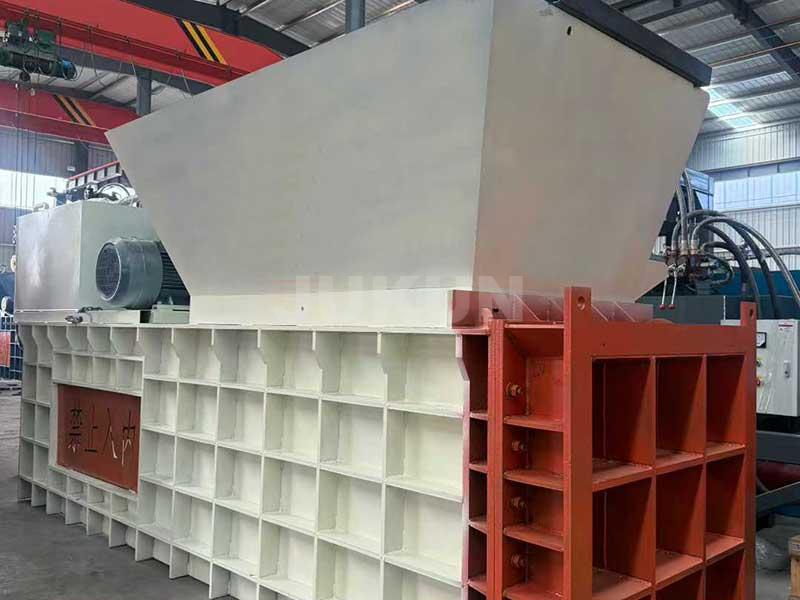
Examine the synchronized system:
Integration efficiency
Jukun balers in full recycling workflows:
| Stage | Time Commitment | Human Input | Integration Point | Failure Risk |
|---|---|---|---|---|
| Material Feeding | Continuous | Load conveyor | Linked to shredder | 5% jam incidents |
| Hydraulic Compression | 1-3 minutes | PLC monitoring | Optimized by sensors | Seal leaks (8%) |
| Tying System | 45-90 seconds | None automated | Auto-detect bale size | Wire breaks (3%) |
| Bale Ejection | <60 seconds | Forklift assist | Floor sensors | Ram misalignment |
Speed compounds savings. Automatic feeding allows compression during previous bale ejection—cutting cycle time 40%. Jukun’s laser sensors detect uneven loads: automatically adjusting piston pressure between 40-250 tons to prevent cardboard jams or PET bottle bursts. Integration extends upstream: our Montreal client synchronized baler start/stop with sorting line speeds—boosting daily capacity 300% without hires. Downstream, dense bales fit standard pallets—slashing trailer loading times 75%. This flow optimizes entire facility efficiency.
What Factors Affect the Price and ROI of a Hydraulic Baler Machine?
Hidden costs surprise buyers. Poor ROI calculations misguide choices. Understand true drivers.
Machine capacity (price doubles every 5 tons/day increase), hydraulic component quality (+120% for Bosch systems), automation level (full automation adds 40-80%), certifications, transport/duties (+15-25%)—each change investment and ROI timeline.
Calculate your specific scenario:
Profitability levers uncovered
Jukun’s North American client data:
| Factor | Price Impact | Maintenance Cost/Year | ROI Influence |
|---|---|---|---|
| Capacity | +$9k/extra ton daily | Minor increase | Faster payback above 8 tons |
| Hydraulics | Branded = +110% | Save $4k-$9k annually | Prevents $20k early failures |
| Automation | Full auto = +75% | Higher sensor costs | Cuts labor enough ROI |
| Construction | Premium steel = +18% | Half the breakdowns | Adds 20% service years |
| Duties/Logistics | Canada = +22% | None | 4-6 month return delay |
Hydraulic quality dictates longevity. A Winnipeg recycler saved $12k buying generic pumps—replaced them twice within five years costing $41k while Jukun clients using Bosch systems averaged 12+ years. Automation ROI surprises many: full auto balers processing >10 tons daily typically repay in under 14 months through eliminated night shifts. Construction materials matter: substandard steel cracks under Canada’s cold—addressing 5mm plate thickness during inspection avoids later $30k chamber replacements. These factors collectively determine your profit timeline.
How to Choose a Reliable Horizontal Hydraulic Baler Manufacturer in China?
Trading companies misrepresent. Counterfeit certificates risk fines. Only physical inspections guarantee trust.
Confirm manufacturing credentials by visiting factories physically, validating CE/ISO certifications online, demanding component proofs, verifying 15+ years experience, testing onsite after-sales response, and reviewing global client installations.

Eliminate supplier risk:
Foolproof verification strategy
Red flags from failed Canadian imports:
| Verification Step | Reliable Indicator | Risk Indicator | Jukun Proof Point |
|---|---|---|---|
| Factory Tour | Active welding/assembly | Empty "showroom" | Live workshop video access |
| Certification | Online database match | Blurred documents | QR codes verifying CE |
| Component Proof | Brand-labeled hydraulics | "Equivalent quality" claims | Bosch valves photo |
| Experience | Client records | Generic testimonials | 18-year export history |
| Support Test | Sub-5 hour email reply | "Contact agent" delays | Documented response times |
Physical validation prevents deception. One Toronto buyer flew to Shandong confirming Jukun produced all parts onsite—uncovering a competitor’s "factory" as an empty warehouse. Certification must be traceable: genuine CE documents include unique identification registered with EU bodies—scan during video calls for verification. After-sales capability matters most: demand screen sharing during diagnostic procedures. Proven manufacturers like Jukun resolve 73% remote issues within eight work hours. This diligence saved a Calgary recycler from $19k customs penalties and 47-day delays.
Conclusion
Horizontal balers boost profits when matched to your volume—choose your Chinese manufacturer through rigorous verification.