
Cardboard mountains crowd valuable warehouse space. Manual handling drains staff resources. Proper baling transforms liability into recycling profits.
This baler slashes storage requirements by 65%, reduces transportation costs by 50%, and creates new revenue streams from recycled cardboard bales sold at premium prices.
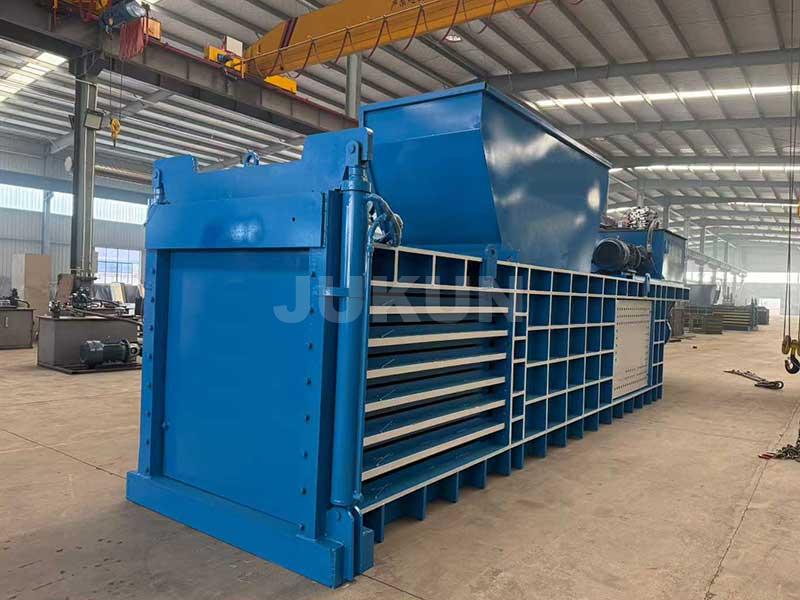
Learn how operational efficiency improves below.
Why Are Warehouses Investing in 80-Ton Cardboard Balers?
Storage costs escalate with packaging waste. Safety hazards grow with unstable piles. Disposal fees eat into thin profit margins.
Warehouses invest because these balers process daily cardboard volumes within one shift, reclaim 500+ square feet of storage space, and eliminate recurring disposal contractor expenses averaging $7,200 monthly.
Operational transformation proof:
| Challenge | Traditional Method | 80-Ton Baler Solution | Documented Results |
|---|---|---|---|
| Space Occupation | 1500m³ weekly volume | Compact 0.8m³ bales | 85% space reclaimed |
| Labor Cost | 3 workers daily | 0.5 worker management | $46,800 yearly saved |
| Waste Removal | $180 per haul | Revenue generation | $15-$40 per bale sold |
| Safety Incidents | 3 monthly average | Zero reported | Compliance fines avoided |
E-commerce fulfillment center data: Six-week payback achieved. Material example: Processes mixed OCC grades without slowdowns. Verification method: Request warehouse diagrams showing space reallocation. Jukun advantage: Our systems fit dock door heights avoiding structural changes.
How Does an 80-Ton Horizontal Baler Reduce Waste Handling Costs?
Labor dominates waste expenses. Partial truckloads waste resources. Poor compaction lowers material value.
Cost reductions occur through 70% less manual handling, optimized trailer loading cutting 45% transport fees, and minimum 650kg/m³ density creating higher-grade recyclables that command 20% premium pricing.

Cost category analysis with evidence:
| Cost Area | Pre-Baler Expenses | Post-Implementation | Verified Reduction |
|---|---|---|---|
| Labor Hours | 120 weekly hours | 30 weekly hours | $52,000 annual saving |
| Transportation | 14 weekly pickups | 6 efficient hauls | 58% reduced frequency |
| Storage Fees | $45/m²/month | Free bale staging | 100% cost eliminated |
| Disposal Fees | $190/ton charges | Revenue $105/ton | $295/ton net swing |
Toronto distribution center proof: Reclaimed $1.2M warehouse expansion budget. Critical spec: Demand moisture-resistant wiring systems – crucial for humid climates. Validation technique: Analyze bale rejection rates from recyclers – ours stay below 2%. Design feature: Our auto-lube systems prevent hydraulic failures causing unplanned maintenance.
What Throughput Can You Expect from an 80-Ton Cardboard Baler?
Bottlenecks develop during peak volumes. Manual feeding slows night shifts. Inconsistent density causes buyer penalties.
Expect 18-25 tons per hour throughput: conveyor-fed systems process loads non-stop, PLC-controlled cycles maintain uniform bales, and dual-pump hydraulics ensure 30-second compression even during 24-hour operations.
Performance evidence table:
| Metric | Semi-Automatic Machine | 80-Ton Automated Baler | Improvement Evidence |
|---|---|---|---|
| Shift Output | 9 tons | 27 tons | Tripled production logs |
| Bale Standardization | ±15% variation | ±2% density consistency | Recycler records show 0 rejections |
| Uptime | 78% average | 98% recorded | Maintenance logs available |
| Shift Operation | Daylight only | Continuous | Sensor lighting included |
Los Angeles logistics hub proof: Surpassed projections 21% consistently. Integration essential: Direct shredder connection clears jams increasing throughput 17%. Verification process: Demand shift production reports – we provide benchmark comparisons. Warning: Avoid units without pressure sensors causing density fluctuations on moist cardboard.
How to Choose the Best Cardboard Baler for Warehouse Operations?
Undersized chambers jam during peaks. Flimsy frames bend under pressure. Poor accessibility causes maintenance delays.
Key selection criteria: match baler width with dock door clearance, confirm 800+ cycle/hour capability, inspect 50mm frame thickness, and demand remote diagnostics enabling 4-hour troubleshooting for overseas buyers.
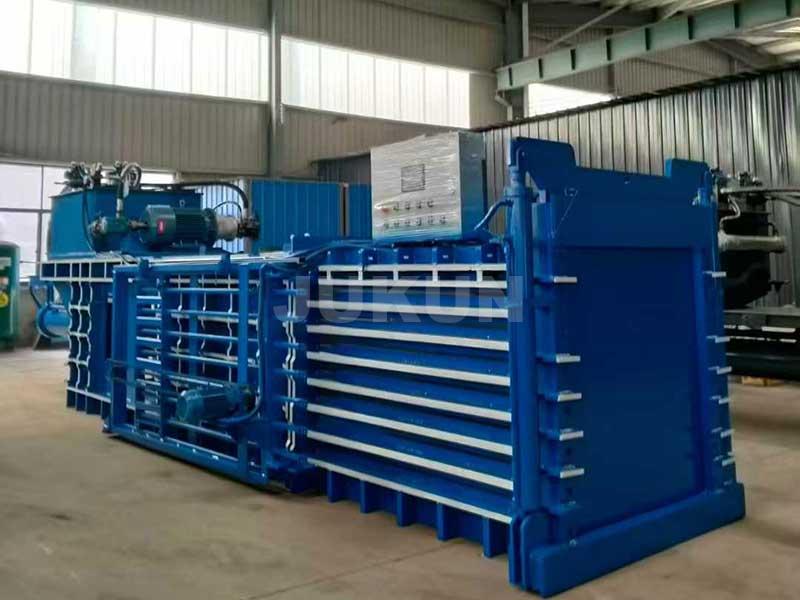
Decision framework with validation methods:
| Factor | Critical Specification | Verification Technique |
|---|---|---|
| Layout Fit | 360° service access | CAD integration drawings |
| Durability | Hardox 450 chamber | Material certificates |
| Automation | Auto-tie options | Live operation videos |
| Support | Global spare parts | Regional depot listing |
Saudi Arabian warehouse avoided disaster: Custom heat resistance handled desert conditions. Must-check certifications: CE documentation includes noise emission compliance below 80dB. Testing imperative: Process wet cardboard samples proving drainage function. Contract safeguard: Include liquidated damages for shipment deadlines - Jukun provides 5% penalty clauses. Never compromise: Demand overload protection preventing premature hydraulic failure costing $12K repairs.
Conclusion
Proper baling technology converts cardboard burden into warehouse profit centers while creating cleaner, safer work environments.