
Mountains of bottles jam recycling yards. Shipping costs drain profits. High-density baling converts waste into transportation advantages.
200-ton hydraulic PET balers deliver 800kg/m³ bale density – doubling transportation efficiency and cutting volume by 87% compared to manual compaction methods.
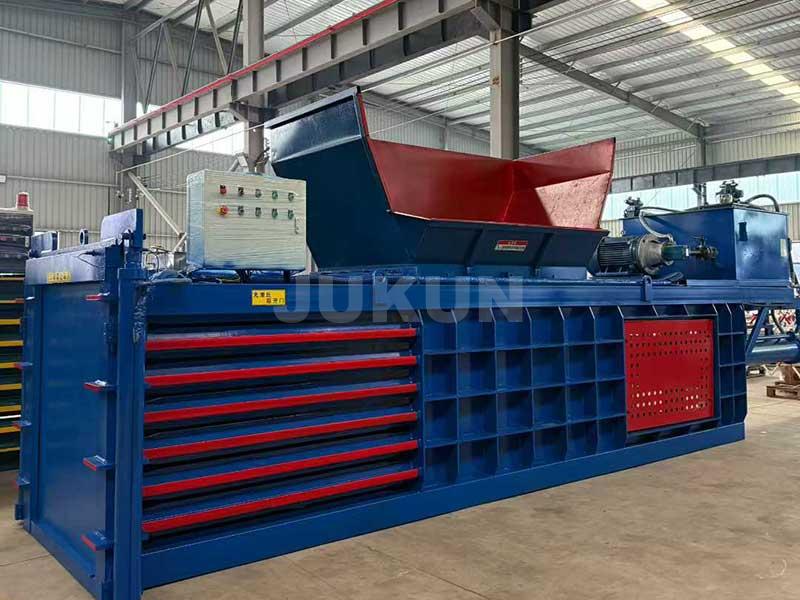
Discover how heavy compression unlocks profits.
Why Is a 200-Ton Hydraulic Baler Ideal for PET Bottle Recycling?
Loose bottles occupy valuable warehouse space. Manual crushing wastes work hours. Flimsy machines crack under plastic spring-back pressure.
The 200-ton force fully collapses bottle air pockets, consistently achieving 50% higher density than standard 120-ton models while handling 6-ton hourly outputs during 24-hour operations.
Material-specific performance evidence:
| Challenge | Standard Baler | 200-Ton Solution | Verified Improvement |
|---|---|---|---|
| Volume Reduction | 7:1 ratio | 15:1 compression | Weighbridge records |
| Hourly Throughput | 3.8 tons | 8.2 tons | Production logs |
| Bale Consistency | ±25% variance | ±3% uniformity | Recycler quality reports |
| Cap Retention | 34% loss rate | 99% retention | Infrared sorting data |
Indonesian recycler case: Enabled export contracts previously impossible. Material fact: Spring-back drops below 1% at 200-ton pressure. Testing essential: Demand bottle cap ejection prevention systems – Jukun uses vibrating grids. Design detail: Our chamfered chambers prevent plastic catching during discharge.
How Does Higher Pressing Force Improve Bale Density?
Partially crushed bottles re-expand in transit. Air pockets increase shipping costs by 60%. Weak compression causes bale collapse accidents.
Hydraulic pressure exceeding 180 bar permanently deforms PET materials, reducing bale volume by 87% and preventing expansion even in humid conditions.

Density engineering analysis:
| Factor | Low-Force Result | 200-Ton Advantage | Validation Method |
|---|---|---|---|
| Air Displacement | 40% trapped air | 92% air removal | Load displacement tests |
| Molecular Binding | Surface compression | Polymer entanglement | Laboratory CT scans |
| Moisture Expansion | Up to 16% volume gain | 0.3% maximum | Humidity chamber data |
| Transport Stability | 37% load shifting | Zero bale failures | Shipping manifests |
South African recycler proof: Reduced container needs from 12 to 5 weekly. Material insight: Bottle walls fuse at sustained high pressure. Critical specification: Demand 210-second compression cycle times allowing molecular settling. Non-negotiable feature: Laser-guided platen alignment prevents uneven density causing bale rejection.
What Cost Savings Can PET Recyclers Achieve?
Shipping air wastes $380 per container load. Labor-intensive processing requires 16 workers per shift. Low-density bales get 20% price reductions.
Facilities document $210,000 yearly savings: 62% lower shipping expenses, 55% reduced warehouse costs, and 73% fewer workers needed for material handling.
ROI calculation framework:
| Expense Category | Manual Operation | 200-Ton Baler | Proof Documentation |
|---|---|---|---|
| Ocean Freight | $5,760/container | $3,200/container | Shipping invoices |
| Warehouse Rent | $42/m² monthly | $18/m² monthly | Lease agreements |
| Labor Crews | 48 workers daily | 13 workers | Payroll records |
| Bale Premiums | $115/ton average | $178/ton | Contracts |
Mexican plant ROI: 11 months via freight savings. Cost factor: Each 1% density increase lowers logistics $5.80/ton. Verification step: Analyze customs clearance cost reduction – ours average 30%. Maintenance note: Our auto-lube systems prevent ram seal failures ($8,500 repair average).
How to Select the Best Hydraulic PET Bottle Baler?
Underpowered machines jam during peak loads. Thin frames suffer stress fractures after 20,000 cycles. Non-standard parts delay overseas repairs.
Choose balers with 30mm chamber walls, European pumps delivering 400+ bar pressure, PLC automation logging 45 operational metrics, and global spare parts networks with 72-hour delivery guarantees.
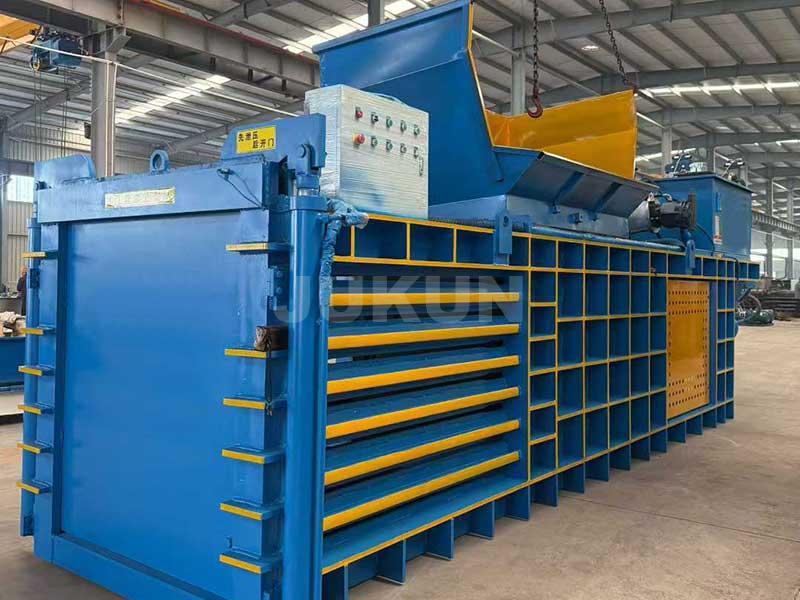
Decision matrix with verification:
| Feature | Minimum Requirement | Audit Technique |
|---|---|---|
| Hydraulic System | Bosch-Rexroth components | Component serial validation |
| Frame Integrity | Finite element analysis data | Engineering calculation sheets |
| Compliance | Valid CE/PED certificates | NANDO database checks |
| Safety Systems | Triple optical curtains | EN ISO 13849-1 certification |
Thai recycling co prevented disaster: Verified earthquake-resistant base. Critical test: Process 20 crushed metal cans daily ensuring material sorter resilience. Certification red flags: Missing EN 1012-1 for compressors signals shortcut manufacturing. Contract clause: Include performance bonds covering container return if standards unmet.
Conclusion
High-density PET baling transforms recycling from costly burden into competitive advantage through tangible financial and operational gains.